- BYD launched the DaHan D-segment flagship to push into executive sedans, leveraging size, rear-seat luxury and a dual-flagship Dynasty strategy amid pressure to climb the value ladder.
- The DaHan measures 5,256mm/1,999mm/1,510mm with a 3,130mm wheelbase, rear-wheel steering, 102.326kWh Blade battery with CLTC 1,008km, 570kW AWD and 0-100km/h in 3.3s, priced RMB 235.9K–275.9K (about $35.3K–$41.2K).
- Targets Mercedes E‑Class/BMW 5 Series/Audi A6 buyers, but execution risks include converting German-brand buyers, scaling premium mix amid mainstream sales tilt, and maintaining margins while expanding features.
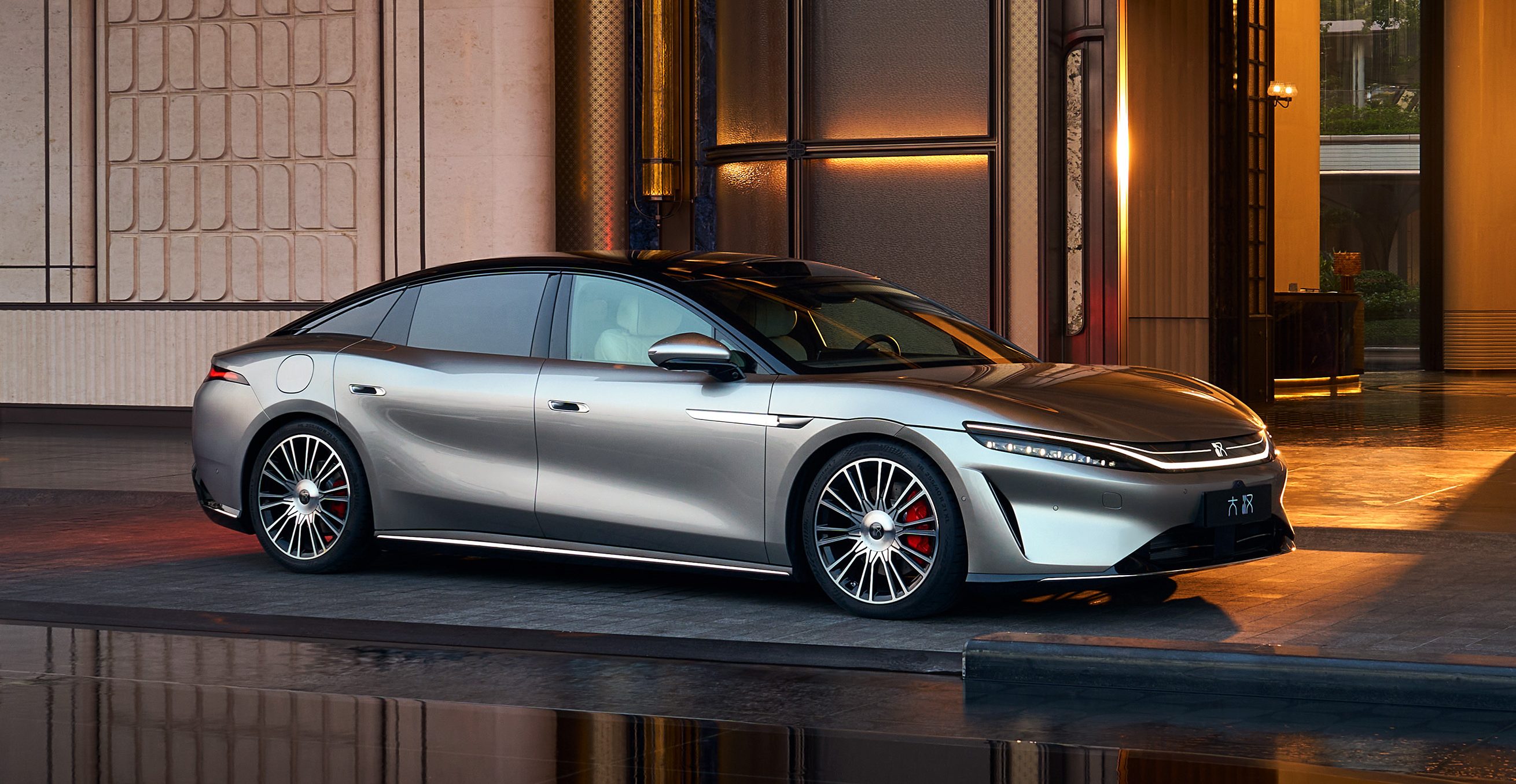
BYD’s Dynasty series launched its first D-segment flagship sedan, the DaHan, on October 13. The model is available in three variants, priced between RMB 235.9K and RMB 275.9K ($35.3K-$41.2K).
As the first “9-series” sedan under BYD’s Dynasty series, the DaHan surpasses all previous Han models in size. It measures 5,256mm long, 1,999mm wide and 1,510mm tall, with a 3,130mm wheelbase.

Despite its large dimensions, the sedan maintains strong urban maneuverability. The DaHan comes equipped with rear-wheel steering, giving it a turning radius of just 4.95 meters, close to that of an A00-class city car.
The flagship sedan is powered by BYD’s second-generation Blade Battery with a 102.326kWh pack. It delivers a maximum CLTC range of 1,008km. The high-performance all-wheel-drive version uses a dual-motor setup with a combined output of 570kW, accelerating from 0-100km/h in as little as 3.3 seconds.
As a D-segment executive sedan, the DaHan places a strong emphasis on rear-seat comfort.
The rear seats feature powered leg rests, ventilation, heating and massage functions. A dedicated control screen integrated into the center armrest allows passengers to adjust climate settings, seat positions and sunshades.

The model also comes with a ceiling-mounted display and smart dimming privacy glass, features that remain rare among sedans priced between RMB 200K and RMB 300K.
In terms of competition, the DaHan faces limited direct rivals among new energy vehicles in its price segment. Instead, BYD is targeting the traditional executive sedan market dominated by models such as the Mercedes-Benz E-Class, BMW 5 Series and Audi A6.
These established German sedans continued to post monthly sales of around 7K units in China in September, highlighting steady demand in the segment.
With DaHan launch, the Dynasty series now features a dual-flagship strategy.

The DaTang SUV, launched earlier, delivered 10,997 units in September and ranked first among China’s large SUV models by sales. The segment has become one of the most competitive areas among China’s premium NEV brands, and DaTang’s performance demonstrates growing market acceptance for BYD’s push into higher-end vehicles.
Whether the DaHan can replicate DaTang’s success will be a key indicator of BYD Dynasty’s next step toward the premium market.
Notably, BYD Dynasty series produced its 10 millionth vehicle in September, with the milestone vehicle being the DaHan.
However, its sales mix has gradually shifted away from flagship models such as the Han and Tang toward more mainstream price segments.

For the full year so far, BYD’s Xia has sold 12,962 units, the Qin series 207,589 units, Han series 44,324 units, Tang series 81,614 units, Song series 391,355 units and Yuan series 485,471 units.
Models in the Qin, Song and Yuan families have contributed the majority of sales, thanks to their stronger presence in mainstream price ranges.
This shows that BYD Dynasty’s focus has evolved from relying solely on flagship models to drive volume toward a two-track strategy: maintaining scale through mainstream vehicles while using DaHan and DaTang to explore the premium segment.
Discover more from ChinaEVHome
Subscribe to get the latest posts sent to your email.