- WeRide will deploy a right-hand-drive Robobus on Sentosa with TADA and SDC, shifting from fixed shuttles to on-demand short-distance passenger service for island connectivity.
- Robobus service launches phased operations early 2027 covering 27 pick-up and drop-off points; WeRide’s global fleet totals about 3,600 L4 vehicles, including more than 1,800 robotaxis.
- Targets ride-hailing and robotaxi segments competing with local transport and Grab partnerships, while risks include timing of phased rollout, insurance/regulatory limits, and scaling operationally on Sentosa.
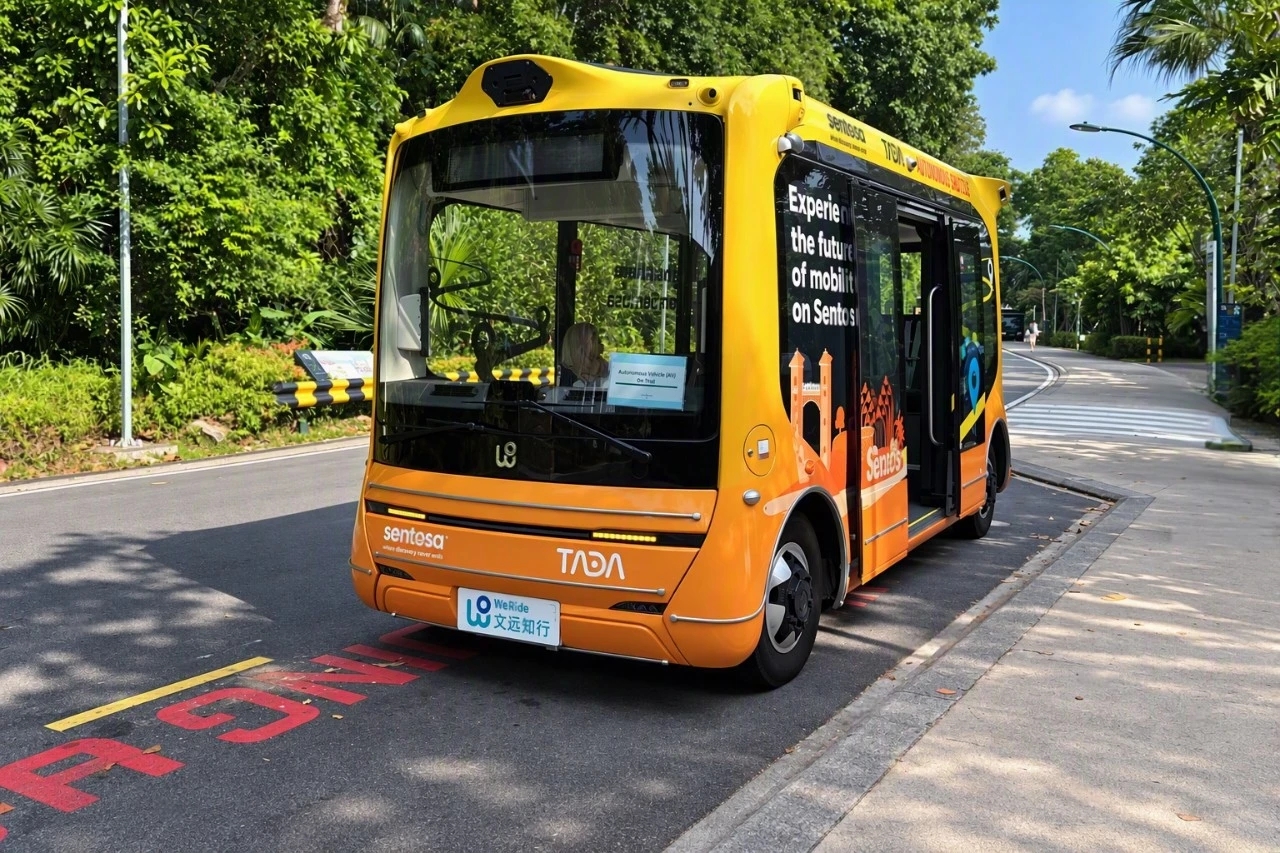
WeRide will deploy a right-hand-drive version of its autonomous Robobus on Sentosa in Singapore under a partnership with the Sentosa Development Corporation (SDC) and local ride-hailing platform TADA, the company announced on Oct. 30.
The vehicle is Singapore’s first Robobus developed specifically for right-hand-drive traffic.
The service is scheduled to begin phased operations in early 2027, initially serving 27 pick-up and drop-off points across the island.
Passengers will be able to book on-demand rides between attractions, transport hubs and other destinations on Sentosa, providing short-distance connections for the first and last legs of their journeys.

WeRide has been building its presence on Sentosa for several years. In 2023, the company obtained Singapore’s M1 and T1 autonomous vehicle permits.
From 2024, its Robosweeper autonomous street-cleaning vehicles were progressively deployed on Sentosa and in Marina Bay.
In July 2025, WeRide’s fully driverless Robobus also began commercial operations on Sentosa, becoming the first autonomous vehicle in Southeast Asia to operate without an onboard safety operator.
The new partnership with TADA and the introduction of a right-hand-drive model will extend the island’s autonomous shuttle services to on-demand transport.
Beyond shuttle services, WeRide is also expanding its robotaxi business in Singapore.

In April this year, the company partnered with Grab to launch Singapore’s first public robotaxi service in Punggol.
The service uses the Robotaxi GXR and had served more than 13,000 passengers as of October, covering over 135,000 km in autonomous driving mileage.
Insurance coverage is another key requirement for the commercial deployment of autonomous vehicles.
On Oct. 27, WeRide announced a global insurance partnership program, naming Allianz Insurance Singapore and Ping An Property & Casualty Insurance as its first partners.
The program covers WeRide’s existing operations in China, Southeast Asia and the Middle East, while providing support for its planned expansion into markets including Europe.

In Singapore, Allianz already provides insurance coverage for WeRide’s fully driverless Robobus operating on Sentosa, becoming the first insurer in the country to underwrite a fully driverless vehicle.
Its coverage was subsequently extended to robotaxis, supporting the autonomous ride-hailing service operated by WeRide and Grab in Punggol.
In terms of operating scale, WeRide’s autonomous driving business now spans 13 countries and more than 60 cities.
Its global fleet comprises approximately 3,600 Level 4 autonomous vehicles, including more than 1,800 robotaxis.
Singapore is one of WeRide’s key overseas markets. Its local operations have expanded from autonomous street-cleaning vehicles and shuttles to ride-hailing and on-demand transport services.
Discover more from ChinaEVHome
Subscribe to get the latest posts sent to your email.