- Dongfeng is negotiating priority access and a JV with CATL to debut its third‑generation Shenxing ultra‑fast battery, reflecting pressure to secure supply and gain share in rapid‑charging offerings.
- CATL claims Shenxing charges 10%–98% in 6 minutes 27 seconds and 10%–80% in 3 minutes 44 seconds, with commercial deployment targeted for Q4; BYD has mass deployment of its 2nd‑gen Blade battery in ~RMB 70,000 cars.
- Targeting mainstream EV and fast‑charging segments against BYD and other suppliers, the plan faces execution risks from rollout timing, production‑vehicle validation, scaling of infrastructure, and supplier diversification.
Dongfeng Motor has been in talks with CATL since the second quarter of this year, seeking priority access to the first application of the battery maker’s third-generation Shenxing ultra-fast-charging battery, according to a Chinese media report.
The two companies are also planning to establish a joint venture. For Dongfeng, the proposed partnership would involve not only securing early access to the new battery but also strengthening supply security and its bargaining position in future procurement.
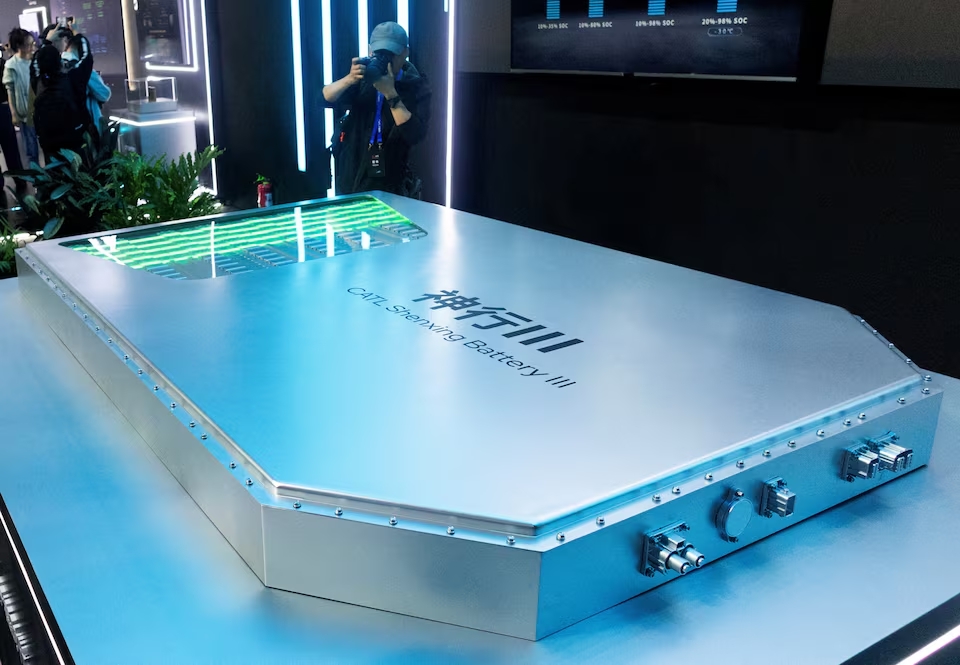
The negotiations come as competition among automakers over ultra-fast-charging technology intensifies. CATL unveiled its third-generation Shenxing ultra-fast-charging battery on April 21 this year.

According to CATL, the battery can be fully charged in just six minutes at room temperature.
Charging from 10% to 80% takes 3 minutes and 44 seconds, while charging from 10% to 98% takes 6 minutes and 27 seconds.
By comparison, BYD’s second-generation Blade Battery, unveiled in March this year, takes five minutes to charge from 10% to 70% at room temperature and approximately nine minutes to reach 97%.
Based solely on the charging specifications released by the two companies, CATL’s third-generation Shenxing battery offers faster charging performance.
However, BYD has already begun deploying its second-generation Blade Battery in mass-production vehicles, including the second-generation Seagull, which is priced in the RMB 70,000 segment.
CATL CTO Gao Huan previously told the media that the third-generation Shenxing ultra-fast-charging battery was expected to enter commercial deployment in the fourth quarter of this year.

Notably, since the second-generation Shenxing ultra-fast-charging battery was launched in April 2025, CATL has yet to announce any specific production vehicle equipped with the battery.
The cooperation between Dongfeng and CATL extends beyond battery procurement.
On October 29, the two companies signed their third group-level strategic cooperation agreement.
This outlined plans to develop an integrated energy replenishment network combining ultra-fast charging and battery swapping, as well as jointly develop next-generation fast-charging technologies.
Dongfeng brands including Voyah, M-Hero and Epicland are expected to be among the first to adopt ultra-fast-charging products rated at 10C or higher.

This suggests that Dongfeng’s reported bid to secure the first application of CATL’s third-generation Shenxing battery is directly linked to the broader fast-charging cooperation already underway between the two companies.
Over the past two years, automakers have continued to diversify their power battery supply chains to reduce reliance on CATL, bringing in suppliers such as CALB, EVE Energy and Sunwoda.
However, installation data show that CATL’s leading position has not weakened.
According to data from CABIA, CATL’s domestic power battery installations reached 257.2 GWh in Jan-Sep 2026, giving it a market share of 43.8%, up 1.8 percentage points year on year.
At the same time, CATL is extending its business beyond battery products into energy replenishment infrastructure.
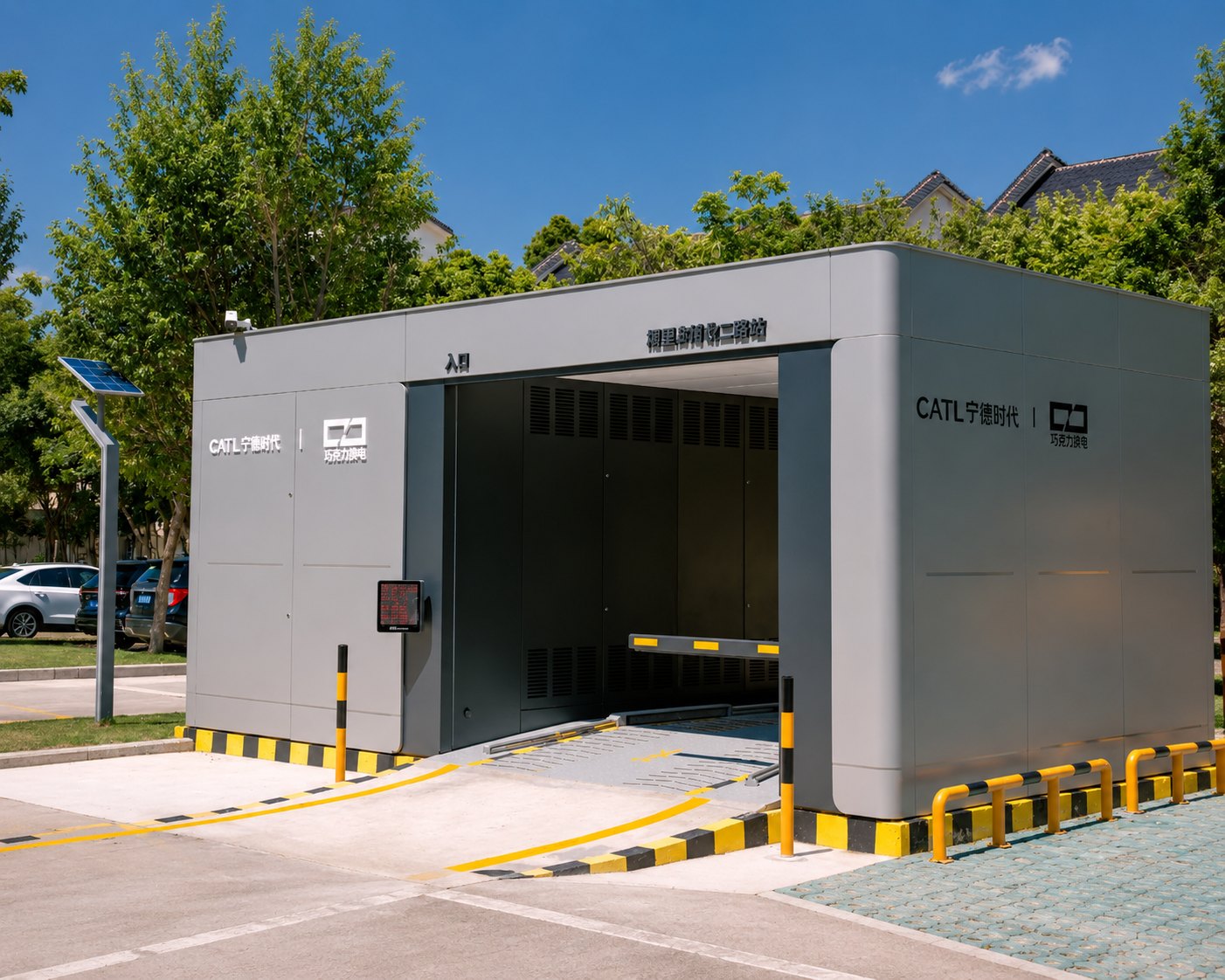
Its Choco-Swap battery-swapping stations are being equipped with Shenxing ultra-fast-charging piles as the company explores integrating battery swapping and fast charging at the same locations.

Earlier this year, CATL signed a five-year strategic cooperation agreement with NIO.
In April, automakers including Chery and BAIC joined its integrated charging and battery-swapping network initiative.
In October, BAIC signed a battery-swapping cooperation agreement with CATL covering one million vehicles.
Huawei’s Yinwang and CATL’s Times Electric Service also integrated their Choco-Swap battery-swapping network with Huawei’s Qiankun intelligent driving system.
The first jointly developed vehicle is scheduled for launch in 2027.
CATL is also expanding its presence in the commercial vehicle sector.
On October 20, the company unveiled its Tectrans II “dual-electric range-extender” solution, with initial orders signed for 13,000 heavy-duty trucks.
The Qiji battery-swapping network plans to have 900 stations in operation by the end of 2026, with the total expected to increase to 2,000 in 2027.
Discover more from ChinaEVHome
Subscribe to get the latest posts sent to your email.