Yesterday, Xiaomi founder Lei Jun announced on Weibo that the company’s self-developed mobile SoC chip has been officially named Xuanjie O1 and will be released in late May.

On the same day as the official announcement of the chip, Xiaomi also held a closed-door speech internally. In addition to introducing the Xuanjie O1, Lei Jun also addressed the recent SU7 fire incident that had sparked widespread public attention.
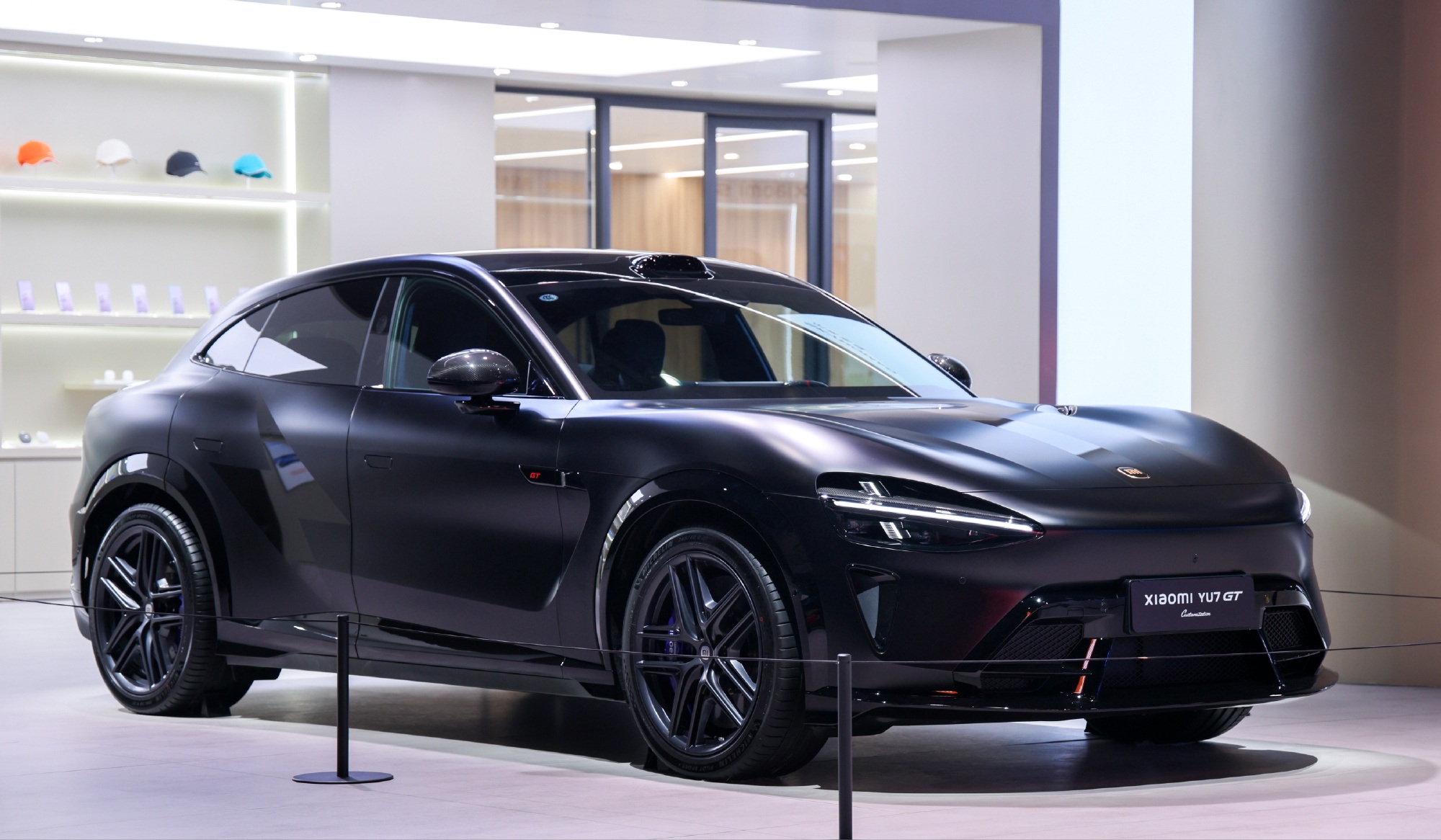
The incident occurred at 10 p.m. on March 29, 2025. A Xiaomi SU7 Standard Edition crashed into a guardrail on the Dezhou–Qimen section of the Deshang Expressway in Anhui Province and caught fire, resulting in the tragic deaths of all three passengers onboard.

Given the sudden nature of the accident, the rapid spread of images from the scene, and Xiaomi’s status as a newcomer to the automotive industry, the tragedy quickly placed Lei Jun and Xiaomi Auto under intense public scrutiny.
“It felt like we were hit by a violent, unexpected storm,” Lei said candidly. “Everyone was in shock. I didn’t expect the impact of this incident to be so overwhelming.”
He recalled that an old friend had told him: while traffic accidents are hard to avoid in the auto business, the expectations placed on Xiaomi far exceed those for a typical carmaker. “Society and the public expect us to shoulder the responsibilities of a true large-scale company—an industry leader.”

“This is the first time in 15 years that I’ve realized so clearly—Xiaomi is no longer just a startup,” Lei said.
Addressing public concerns about vehicle safety, Lei stressed that Xiaomi would dedicate more resources and determination to this area. “It’s not just about meeting regulatory requirements or being slightly above the industry average. Our goal is to build the safest vehicle in its class.”
At the end of his speech, Lei also reflected on Xiaomi’s development pace and long-term commitment. He noted that the company, founded in 2010, has now reached its 15-year mark, having endured doubt, turbulence, and countless challenges. Yet through it all, Xiaomi has proven its most valuable qualities: perseverance, resilience, and an unyielding spirit.

“Xiaomi today is still far from its strongest,” Lei said. “But that’s okay—we’ll keep moving forward, until the day we’re fully proven.”
Below is the full transcript of Lei Jun’s speech:
This year marks Xiaomi’s 15th anniversary—a milestone we had planned to celebrate with a series of events. But at the end of March, an unexpected traffic accident shattered everything. We were hit by a storm of doubts, criticisms, and accusations. Like many of my colleagues, I was caught completely off guard.
A friend with deep knowledge of the auto industry told me, “Accidents are part of making cars.” But no one expected this one to have such a massive impact—and deal such a heavy blow to Xiaomi.
Looking back, when we decided to enter the auto industry four years ago, I was already very concerned about safety. That’s why we placed extreme emphasis on quality and safety from day one. After years of hard work by the auto team, I’ve always felt proud of the SU7’s quality. In every authoritative test we’ve participated in, we earned top scores.
Still, we were unprepared for the emotional impact of this accident. It made us realize: the public’s expectations of us are far higher than we imagined.
We’ve always seen ourselves as newcomers to the auto industry—a startup company. But this incident made it abundantly clear that Xiaomi’s size, influence, and public visibility have reached a very different level. Society now expects us to shoulder the responsibility of a true industry leader. And that’s a responsibility we can’t ignore—this is now Xiaomi’s burden, 15 years in the making.
So today, I want to say this: at 15 years old, Xiaomi is no longer an industry newcomer. We no longer enjoy the grace period of being “new” in any sector we enter. We must hold ourselves to higher standards and aim for greater goals.
When it comes to automotive safety, let me be clear: our aim is to make the safest car in our class. We won’t just meet compliance standards. We won’t just strive to be industry-leading. As a company aspiring to lead the auto industry, we will go beyond the industry benchmark.
On April 1st, I said on Weibo: Xiaomi will not avoid any issue. And I meant it. Not avoiding means facing problems head-on, confronting ourselves, acknowledging our mistakes, and committing to continuous improvement. This is incredibly difficult. It requires everyone on the team to take this seriously, and for all of us to work together as one.
Over the past month, I’ve held countless meetings with management and the auto team. And the theme of every meeting has been the same: how can we systematically solve these issues? How do we demonstrate better governance and operational performance to meet the public’s higher expectations?
We originally planned to host many anniversary events this year, but most have been canceled. Still, I believe this is a valuable opportunity to reflect on our past five years—the gains and the lessons.
Personally, I believe Xiaomi’s most important achievement in the past five years has been staying true to our technology-first principle. Five years ago, we set a new goal: to become a global leader in next-generation hard tech. We pledged to invest over 100 billion yuan in R&D over five years. So far, we’ve invested around 105 billion. This year alone, we expect to invest more than 30 billion.
Today, I want to share a very important announcement: our self-developed mobile SoC chip, Xuanjie O1, will be released at the end of this month.
This marks a milestone in our decade-long journey in chipmaking—and a new beginning for Xiaomi as a hard tech leader. Developing chips is something our fans have long hoped for, and it’s a critical step in our quest to lead the future of technology. Xiaomi will charge forward with no hesitation.
2019 was one of the most difficult years for us—riddled with both internal and external challenges. At the end of that year, at our supplier conference, I told our partners: “Adversity reveals true strength, and distance tests the endurance of a horse.” I believe that by now, our partners can clearly see: today’s Xiaomi is far stronger than it was five years ago.
Xiaomi has now been around for 15 years. We’ve been through many ups and downs, and our resilience has been proven time and again.
I remember when we first started out, I thought it would take 15 years for people to truly understand and recognize Xiaomi. Looking back now, that was too optimistic—15 years still isn’t enough. But that’s okay. We’ll keep going, until the day we are fully recognized.
Xiaomi today is still not at its strongest. But in terms of persistence, resilience, refusal to give up, and the will to never be defeated—no one has more grit or patience than we do.
Discover more from ChinaEVHome
Subscribe to get the latest posts sent to your email.