In October, China’s used-car disposal volume reached 842,600 units, up 3.6% month-on-month but down 6.2% year-on-year.
On November 3, the China Automobile Dealers Association (CADA) and Jingzhengu jointly released the China Automobile Value Retention Report (October 2025), showing that while seasonal demand boosted used-car transactions, overall prices continued to slide.
In October, China’s used-car disposal volume reached 842,600 units, up 3.6% month-on-month but down 6.2% year-on-year. Although holiday travel demand briefly lifted market activity, overall pricing remained weak, prompting dealers to favor discounting strategies.
Retention rates fell across all segments, with small cars at 52.9%, mid-to-large SUVs at 54.9%, and MPVs at 56.4%, narrowing the gap between vehicle categories.

Among luxury brands, Porsche maintained the highest resale value at 66.2%, though slightly lower than the previous month. Lexus (60.4%) and Land Rover (50.5%) bucked the downward trend with modest gains.
Both primarily import-driven brands have relatively stable supply-demand dynamics, with Land Rover’s retention rate now surpassing BMW and Audi. However, with sales softening in key segments, the sustainability of several traditional luxury brands’ operations in China is being tested.

Among joint-venture marques, Japan’s Honda, Toyota, and Nissan saw retention rates fall to 55.6%, 54.8%, and 46.4% respectively, eroding their long-held advantage.
French and American brands such as Citroën, Peugeot, and Chevrolet remained at the lower end of the spectrum with subdued market performance.

The report noted that as hybrid powertrains become mainstream, technological differentiation among brands is narrowing, intensifying product homogenization and weakening the appeal of Japanese models in the used-car market.
Self-owned brands also showed overall decline with pockets of resilience. Traditional leaders like GAC Trumpchi (55.8%) and Tank (55.5%) held steady.
Roewe and MG both improved to 46.1%. Other rising performers included Oshan, BYD, Zeekr, and Leapmotor, with retention rates of 44.7%, 44.6%, 44.6%, and 44.1% respectively.

The competition was most intense in the new energy segment. Plug-in hybrid vehicles (PHEVs) performed robustly, with their retention rate inching up from 43.2% in September to 43.7% in October.
Battery electric vehicles (BEVs), however, were pressured by new model launches and intensified competition in the new-car market, pushing their rate down from 42.8% to 42.0%.

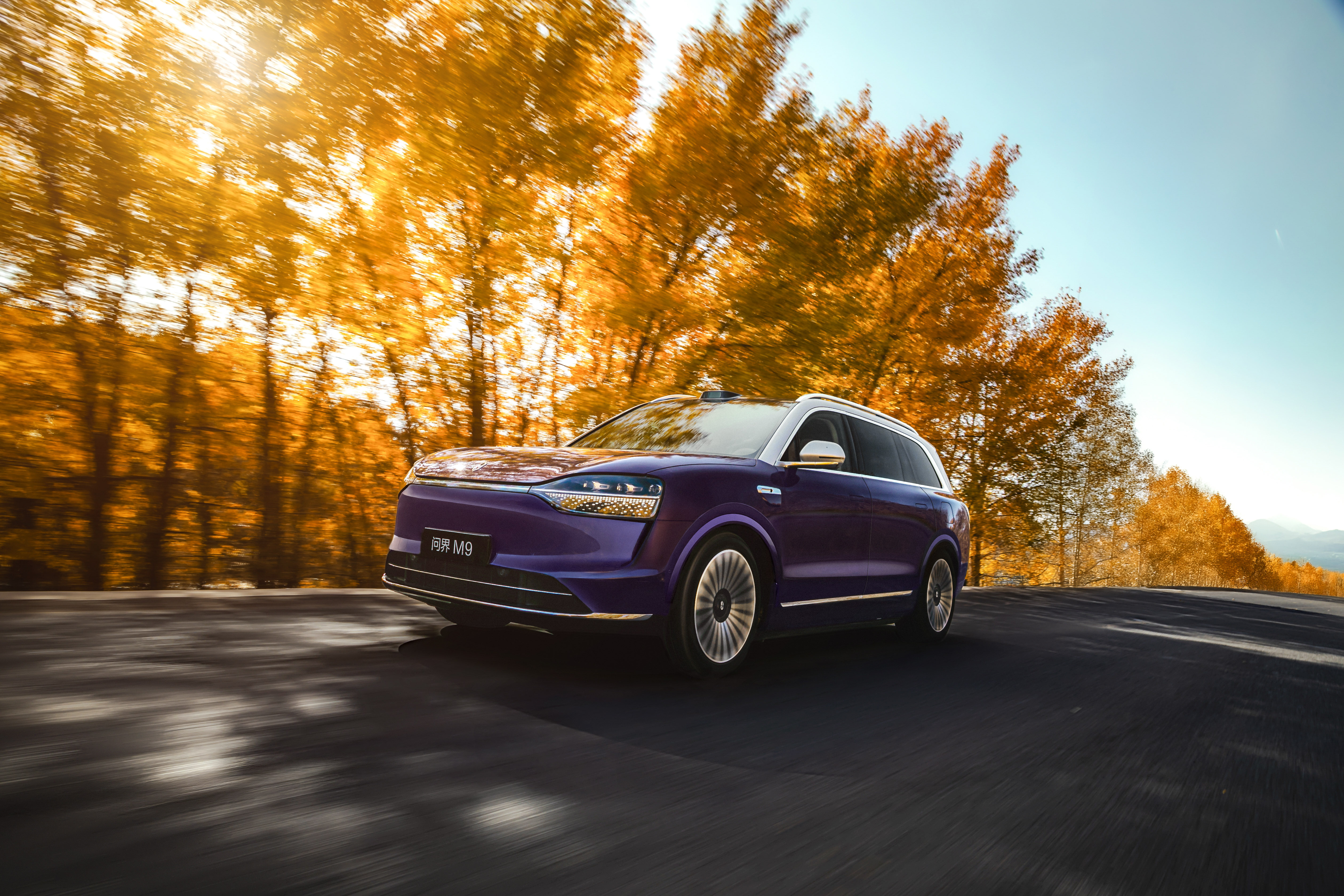
Among one-year-old BEVs, Xiaomi’s SU7 topped the chart at 85.1%, followed by AITO M9 (80.4%) and Xingyuan (79.3%).
A separate quarterly report from WAYS Consulting also ranked Xiaomi SU7 first among new EV makers with a one-year retention rate of 99.4%.
For three-year-old models, Tesla Model 3 (52.5%), Porsche Taycan (51.8%), and Roewe iMax New Energy (49.9%) led the BEV rankings.

In the PHEV segment, SUVs dominated October’s leaderboard. For one-year-old vehicles, AITO M9, Porsche Cayenne E-Hybrid, and Tank 700 New Energy took the top three spots, with retention rates of 82.2%, 80.6%, and 80.0%, respectively.
For three-year-old models, the top performers were Li Auto L9 (55.3%), Porsche Cayenne E-Hybrid (55.0%), and Porsche Panamera E-Hybrid (54.9%).

Overall, despite continued government incentives for vehicle trade-ins and financial subsidies, structural price adjustments in the used-car market are ongoing. Although supply volumes rose month-on-month, the pace of growth slowed sharply.
Toward year-end, vehicle disposals are expected to outnumber purchases, keeping overall supply-demand conditions loose.
Discover more from ChinaEVHome
Subscribe to get the latest posts sent to your email.