The strategic cooperation will focus on three key areas: intelligent chassis, battery swap technology, and battery leasing.
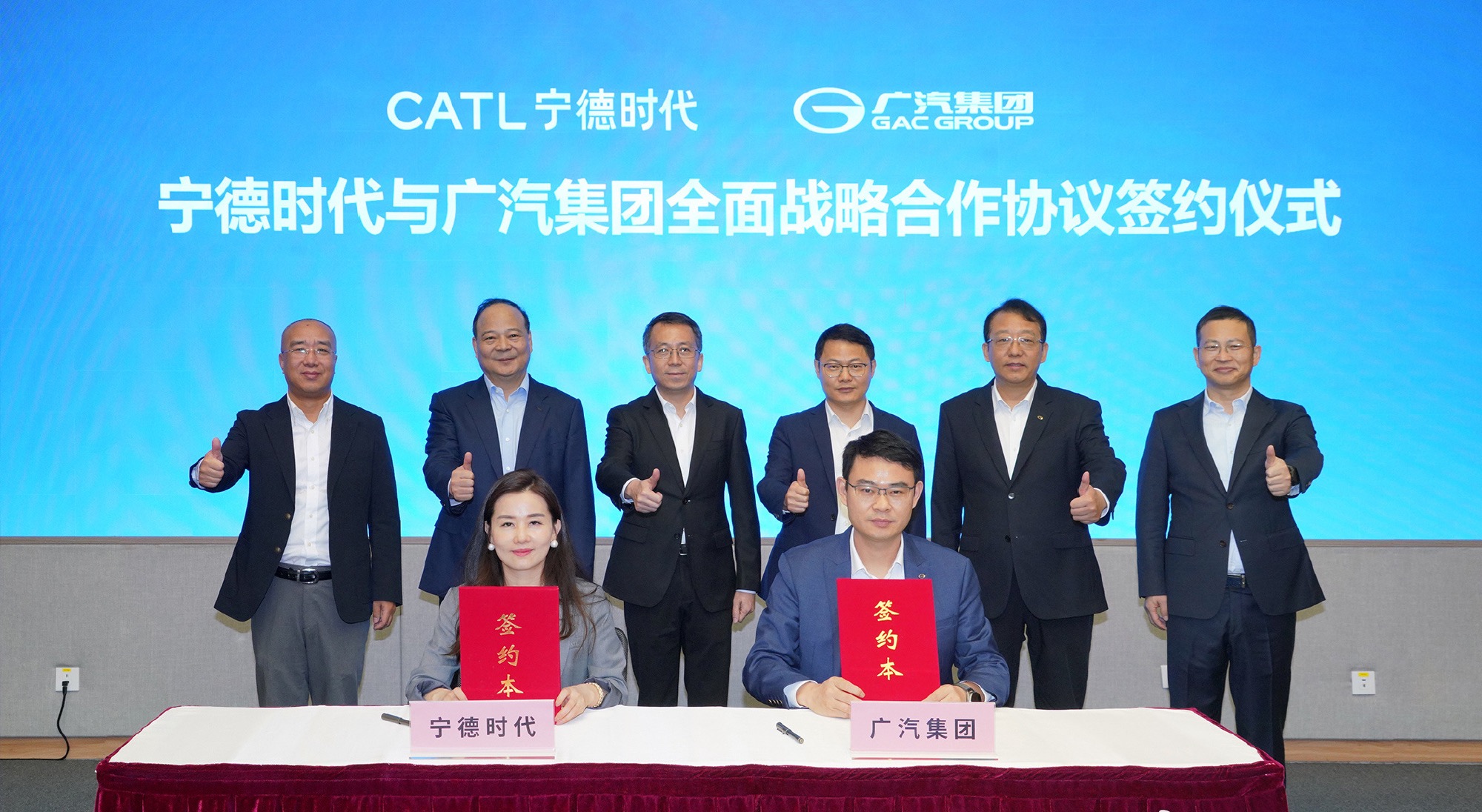
Recently, CATL and GAC Group officially signed a comprehensive strategic cooperation agreement spanning ten years.
According to the agreement, CATL and GAC Group will focus on joint research and development in areas such as intelligent chassis and battery swap ecosystems. Leveraging CATL’s expertise in power batteries, energy storage systems, and energy services, they will jointly develop new energy vehicle models. Furthermore, aligned with GAC Trumpchi’s vehicle planning, the two companies are actively advancing the application of the Stone Chassis technology.
Beyond technical R&D, the partners will also deepen long-term cooperation in business segments like battery leasing and joint station construction, promoting the development of the Chocolate Battery Swap ecosystem.

This collaboration is not the first between GAC Group and CATL.
Over the years, the two companies have maintained continuous synergy in key areas including battery R&D, battery swap networks, and electric platforms. This collaboration has already resulted in several popular models, such as the Aion RT, Aion Y, Hyper HL, and Trumpchi Vision S9.
Shortly before the agreement was signed, the first non-operational battery-swap model jointly developed by JD.com, GAC, and CATL, the Aion UT Super, officially launched, marking a new phase of ecological synergy between the three parties.

Battery swap ecosystem development is a highlight of this cooperation.
As of November 8, the 800th ChocolateSwap station nationwide has been officially completed near Xi’an’s Daming Palace. According to the plan, the Chocolate Swap network aims to establish 1,000 stations across 45 Chinese cities by the end of 2025, expanding to approximately 2,500 stations in around 120 cities by 2026, with a long-term target of reaching 30,000 stations.
At the critical juncture where the penetration rate of NEVs has surpassed 50%, this newly formed ten-year cooperation appears more like a natural choice for the two companies to leverage their complementary strengths.
Discover more from ChinaEVHome
Subscribe to get the latest posts sent to your email.


