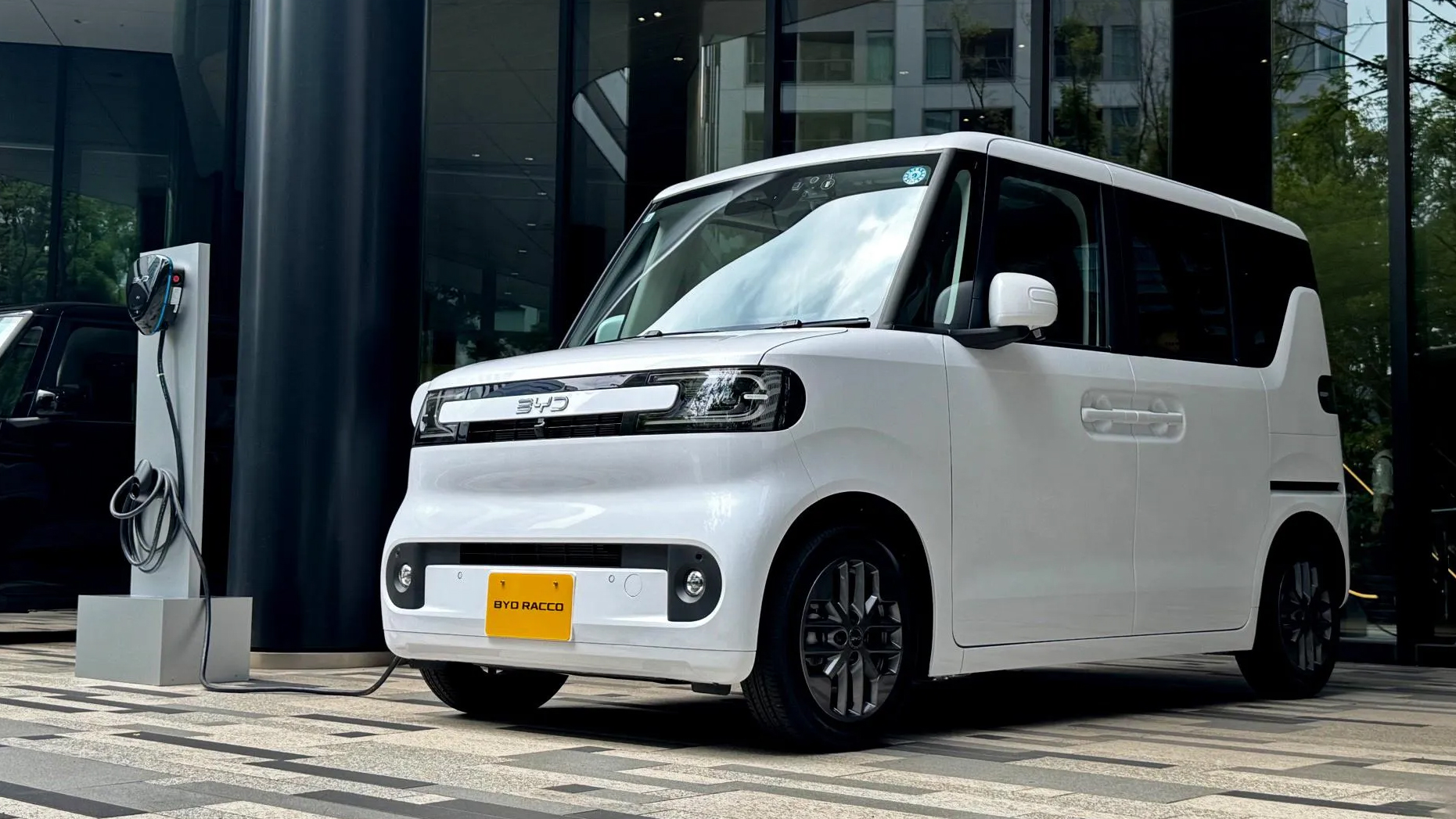
- BYD Racco surpasses 700 deliveries in Japan within days of its July 28 launch.
- Racco attracted 5,000+ preorders in its first week and targets 10,000 orders by 2026.
- Competitive pricing, sliding doors, and up to 320km range fuel strong local consumer interest.
On August 4, Japanese media reported that BYD’s first K-Car-style pure electric vehicle Racco has gained strong early market interest after entering Japan.
The Racco, designed specifically for the Japanese market, officially launched in Japan on July 28. The model recorded 125 registrations in July, mostly dealer test-drive units. BYD said actual deliveries have already exceeded 700 units.

Racco had already attracted strong attention before its official launch. As ChinaEV Home previously reported, reservations opened on July 21, with locked-in orders surpassing 5,000 units during the first week of pre-sales. BYD Japan aims to secure 10,000 cumulative orders for Racco by the end of 2026.
The launch comes as Japan’s auto market continues to recover. Data from the Japan Automobile Dealers Association (JADA) and Japan Light Motor Vehicle and Motorcycle Association showed Japan’s new vehicle sales, including mini vehicles, reached 417,000 units in July 2026, up 7% year over year. Sales have stayed above last year’s level for four consecutive months.
Regular passenger vehicle registrations reached approximately 277,000 units, up 10% year over year. Light vehicle sales totaled 140,000 units, up 2%, marking the first growth in four months.

K-Car, Japan’s unique mini vehicle segment, has long played a major role in the local auto market. With compact dimensions, low ownership costs, and efficient urban mobility, K-Cars typically account for around 35%-40% of Japan’s new vehicle market, with annual sales exceeding 1 million units.
However, the segment has historically been dominated by Japanese automakers. Suzuki, Daihatsu, Honda and other local brands control most of the market, while overseas manufacturers have struggled to gain a foothold.

Racco’s early traction is closely linked to its positioning around Japanese consumer needs. The EV starts at JPY 2.145M ($13.6K). After Japan’s JPY 150K ($950) government subsidy, the effective price drops to around JPY 1.995M ($12.6K). Compared with traditional gasoline-powered K-Cars, Racco lowers daily running costs through electric power, while offering more intelligent features.
The model also adopts sliding rear doors, a design that matches Japanese family needs. With urban parking spaces often limited, sliding doors improve access convenience, especially for families and elderly users. The high-end version offers up to 320km of range, covering daily commuting and short-distance travel scenarios.

Japan’s K-Car market growth is also supported by long-standing policy advantages. Compared with regular passenger vehicles, K-Cars benefit from lower taxes, insurance costs and ownership expenses. In some rural areas with lower population density, buyers can purchase K-Cars without providing parking certificates, further reducing ownership barriers.
Overall, Racco’s first-week market response extends the momentum from its pre-sale phase, showing initial validation of BYD’s Japan-focused product strategy. However, the model still faces challenges from local brand competition, production ramp-up, delivery efficiency and after-sales network expansion.
Discover more from ChinaEVHome
Subscribe to get the latest posts sent to your email.