- BYD launches Qin MAX with nine variants priced RMB 99.9K–143.9K to reclaim lower-mid segment.
- All Qin MAX models ship with megawatt charging that boosts battery from 10% to 97% in nine minutes.
- Qin family sales slumped in H1 2026, prompting BYD to reposition with youth styling and aggressive pricing.
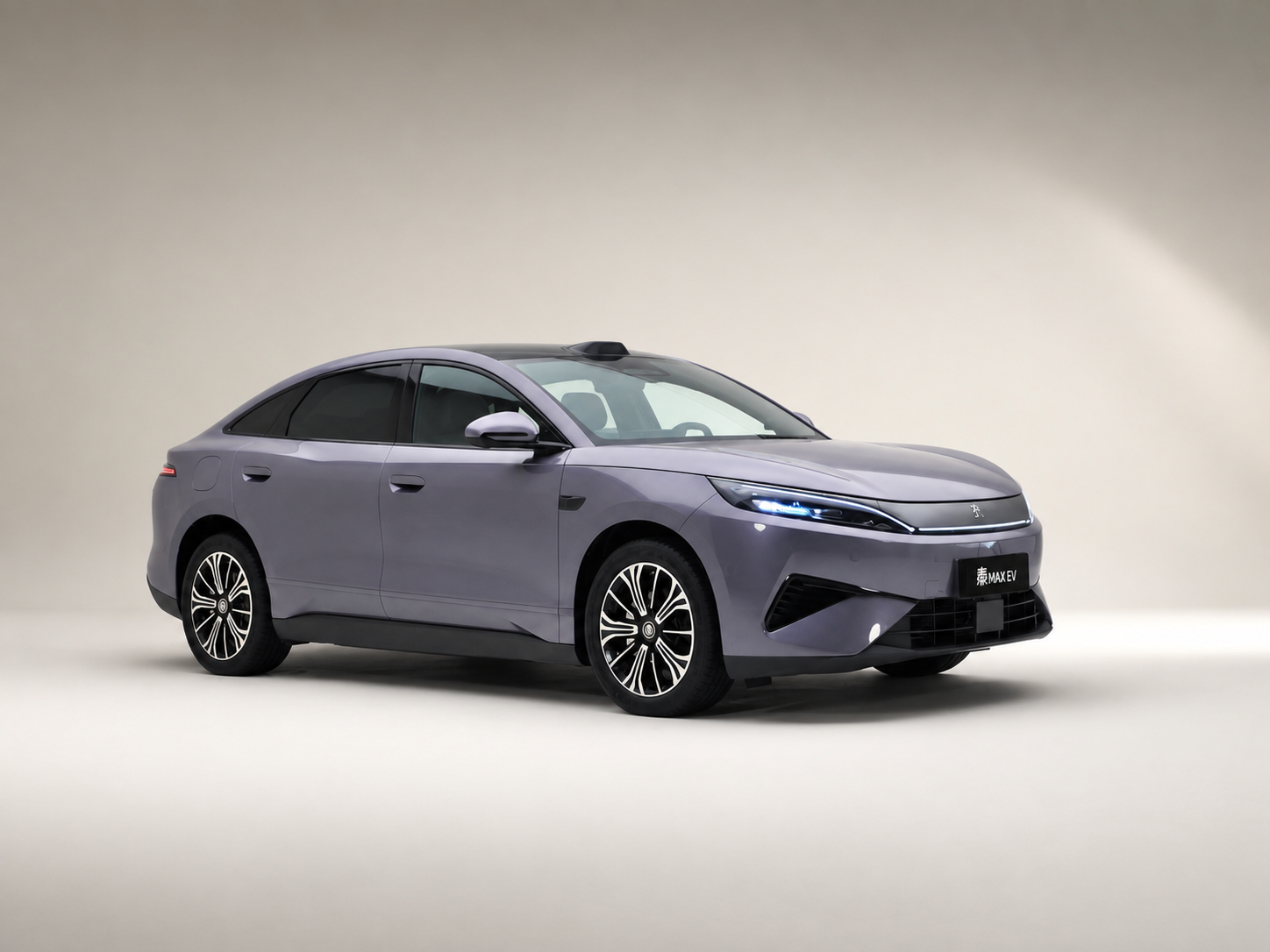
BYD officially launched the Qin MAX on Aug. 13, expanding its Qin family with both battery-electric and DM-i plug-in hybrid powertrains.
The new sedan comes in nine variants, priced from RMB 99.9K to RMB 143.9K ($14.8K-$21.3K).
The Qin MAX DM-i is offered in four variants priced from RMB 99.9K to RMB 129.9K ($14.8K-$19.3K). The Qin MAX EV comes in five variants, priced from RMB 109.9K to RMB 143.9K ($16.3K-$21.3K).

Positioned as a new B-segment sedan for younger buyers, the Qin MAX brings a larger body and more youthful styling, positioning the Qin family beyond basic urban transportation.
The sedan measures 4,866 mm in length, 1,880 mm in width, 1,495 mm in height, with a 2,820 mm wheelbase.
The Qin MAX follows BYD Dynasty’s “Dragon Face” design language. It features a full-width front trim, slim headlamps, semi-hidden door handles and 18-inch wheels. The rear adopts the Dynasty lineup’s signature full-width taillights with a Chinese-knot motif.

The Qin MAX EV uses BYD’s second-generation Blade Battery, paired with its megawatt charging technology. The model offers up to 630 km of CLTC pure-electric range. The DM-i version provides 320 km of CLTC electric range, with a maximum combined range of 2,370 km.
The bigger story is its charging system. BYD has equipped the entire Qin MAX lineup with megawatt charging. The system can raise battery charge from 10% to 97% in nine minutes, an uncommon charging speed in the RMB 100K ($14.8K) segment. The move marks another step in BYD’s push to bring high-power charging into mainstream vehicles.
The Qin L has now been discontinued, leaving a gap in BYD’s lineup around this price range. With a RMB 99.9K ($14.8K) starting price, the Qin MAX moves directly into that space.

At the same time, BYD’s push toward higher-end models has shifted more resources toward products such as Seal 08 and Tang. The Qin family, once a major volume driver, lost competitiveness during the first half of 2026, with sales falling sharply.
The sales data reflects the trend. Qin Plus sold 79K units from January to July, down 46% year over year. Qin L sales reached 61K units over the same period, down 38%.
The Qin MAX pricing strategy signals BYD’s attempt to rebuild its position in the lower and mid-price segments, where the company previously held a strong lead.
BYD Dynasty remains the company’s largest product series by sales contribution. The lineup sold 161,148 units in July, up 20.5% year over year, accounting for about 39% of BYD’s total monthly sales.
Discover more from ChinaEVHome
Subscribe to get the latest posts sent to your email.