- CATL reported strong top-line expansion driven by volume growth and product rollout, reflecting a strategic push to capture share from legacy suppliers and broaden localization globally.
- Revenue reached RMB 442.137 billion for first nine months and RMB 165.221 billion in Q3, net profit attributable RMB 64.53 billion YTD and RMB 21.246 billion in Q3, gross margin fell to 20.69%.
- Targets urban swap and heavy-truck segments with 2,500+ Choco‑Swap stations and 13,000-unit initial Qiji agreements, but margin erosion, weaker operating cash flow and scaling risks could slow execution.
CATL reported revenue of RMB 442.137 billion ($66.2 billion) in the first three quarters of 2026, up 56.19% year over year, according to its latest financial results released on HKEX.
Its net profit attributable to shareholders of the parent company rose 31.6% to RMB 64.53 billion ($9.66 billion).
In the third quarter alone, revenue reached RMB 165.221 billion ($24.74 billion), up 58.58% year over year.
Net profit attributable to shareholders of the parent company was RMB 21.246 billion ($3.18 billion), up 14.54% year over year but down 5.77% from the previous quarter.

CATL has continued to post faster revenue growth than profit growth in each quarter this year, with the gap between the two widening.
Revenue growth was 52.46% in the first quarter of 2026, 56.9% in the second quarter and 58.58% in the third quarter.
Meanwhile, year-over-year growth in net profit attributable to shareholders of the parent company slowed from 48.55% in the first quarter to 36.4% in the second, before falling further to 14.54% in the third.
The widening gap between revenue and profit growth largely reflects declining gross margins. CATL’s gross margin in the third quarter was 20.69%.
That was down 5.11 percentage points from 25.80% a year earlier and below the 23.15% recorded in the second quarter, making it the lowest level since the fourth quarter of 2022.
The net profit margin attributable to shareholders of the parent company was 12.86% in the third quarter, down 4.94 percentage points year over year and its lowest level since the first quarter of 2024.
Net cash generated from operating activities totaled RMB 61.625 billion ($9.28 billion) in the first three quarters, down 23.60% year over year, indicating mounting pressure on operating cash flow.
Expanding business volume remained the main driver of revenue growth. CATL sold more than 260 GWh of power and energy storage batteries combined in the first three quarters.

Energy storage batteries account for about one-quarter of the total, with sales rising nearly 60% year over year.
CATL continued to gain share in the power battery market.
According to SNE Research, the company accounted for 39.4% of global power battery usage from January to August 2026, up 1.7 percentage points from a year earlier.
Data from the CABIA showed that CATL’s share of China’s domestic power battery market reached 44.16% in the first nine months of the year, up 1.41 percentage points year over year.
CATL is also expanding its energy storage business overseas. Its TENER sodium-ion energy storage system has secured agreements with multiple European customers, supporting the adoption of sodium-ion batteries in energy storage applications.
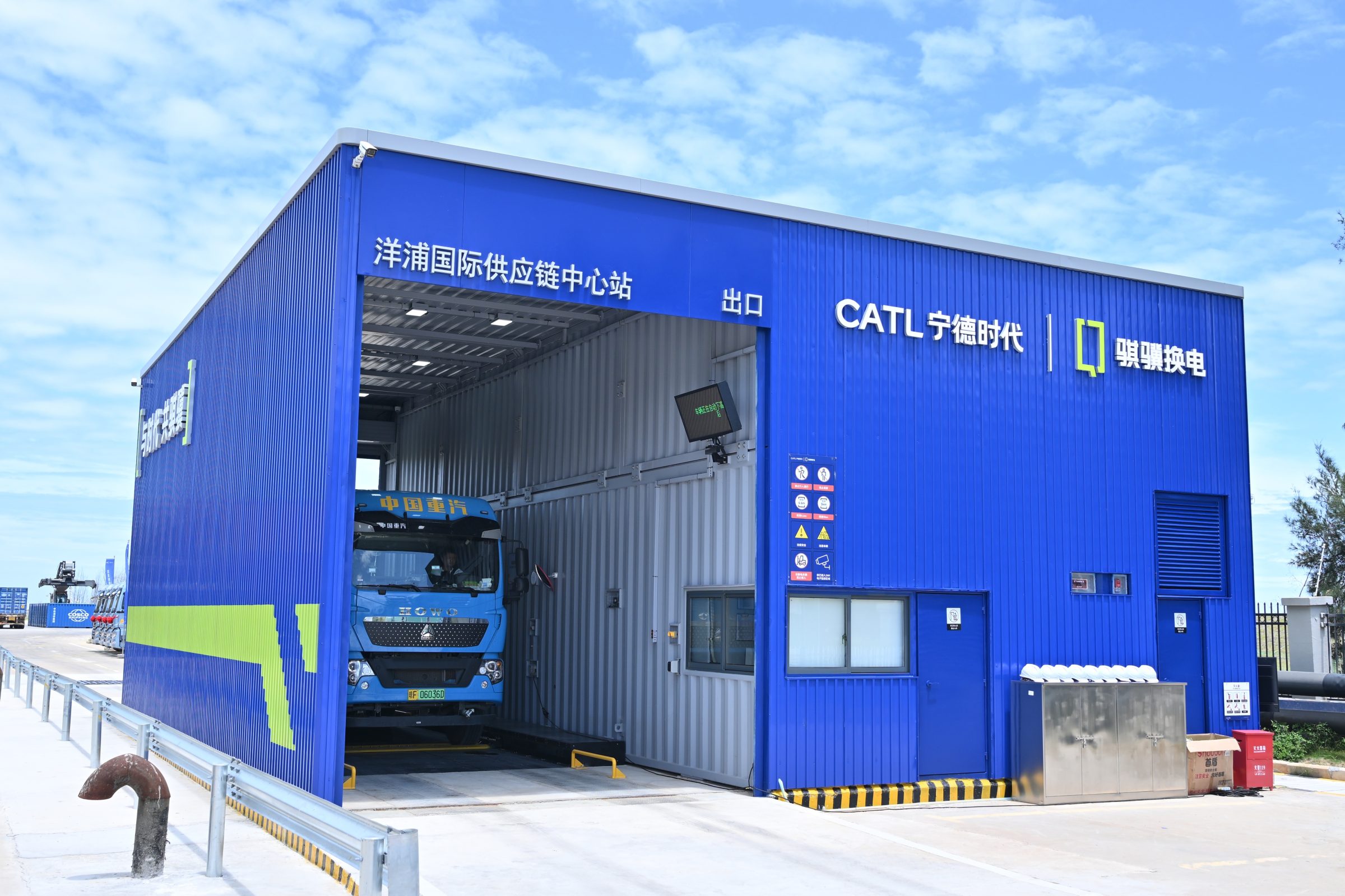
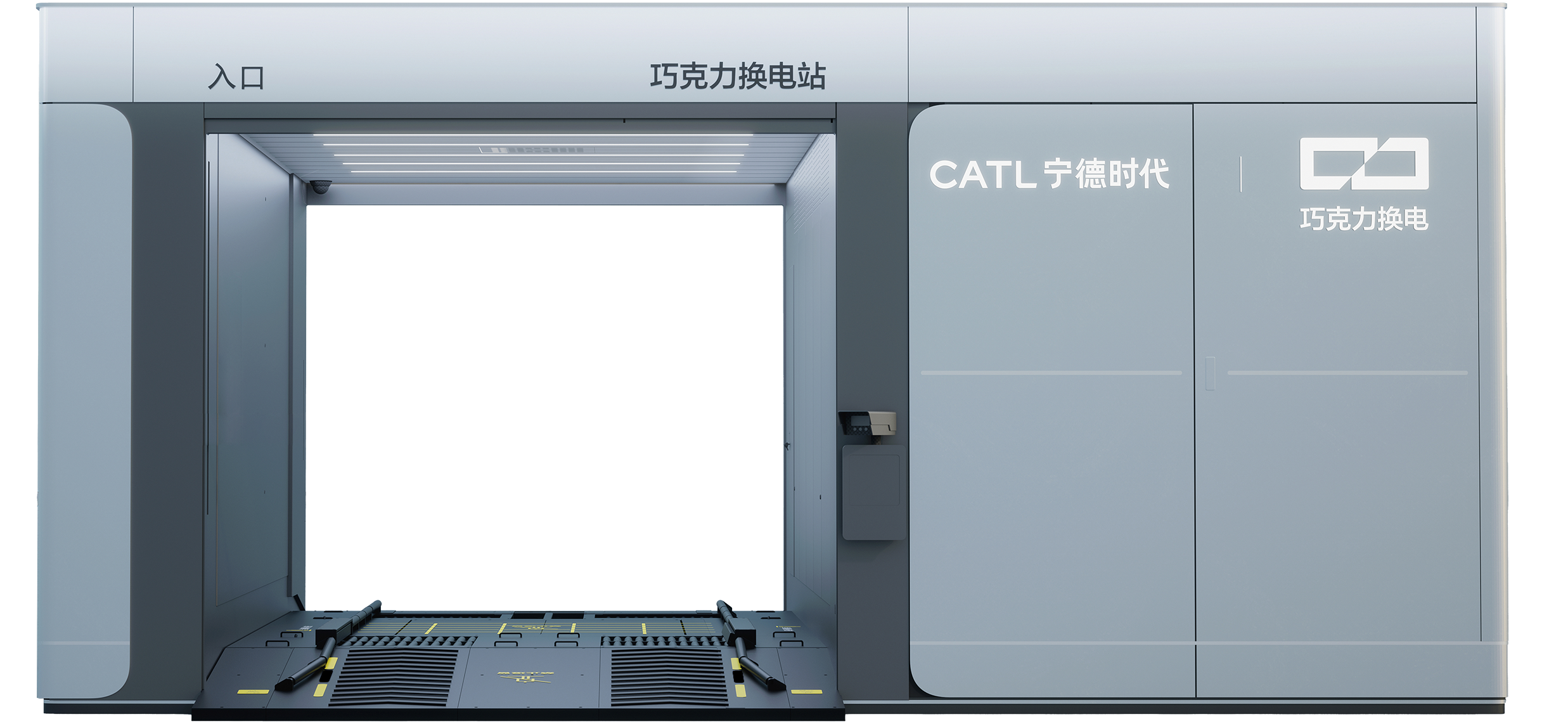
The company is continuing to develop two battery-swapping businesses: Choco-Swap for passenger vehicles and Qiji for heavy-duty trucks.
In the passenger vehicle segment, more than 2,500 Choco-Swap stations have been built across all 31 provincial-level regions in China.
The network supports more than 30 vehicle models, with the station count targeted to reach 3,000 by the end of the year.
In commercial vehicles, CATL continues to expand its Qiji heavy-duty truck battery-swapping system.

CATL previously acquired an equity stake of 24.87% in Qiyuanxin Power, becoming its largest shareholder.
The company currently operates approximately 1,700 charging and battery-swapping stations.
On the same day it released its financial results, CATL also unveiled its Tectrans II full-scenario solution for heavy-duty trucks and the Qiji battery-swapping ecosystem.
It introduced five heavy-duty truck battery variants, including an “dual-electric range-extender” version, with initial agreements covering 13,000 units.
Discover more from ChinaEVHome
Subscribe to get the latest posts sent to your email.