ONVO L90 launch Q&A covers pricing strategy, profitability, ES8 updates, market reaction, AI integration, and NIO’s future SUV plans.
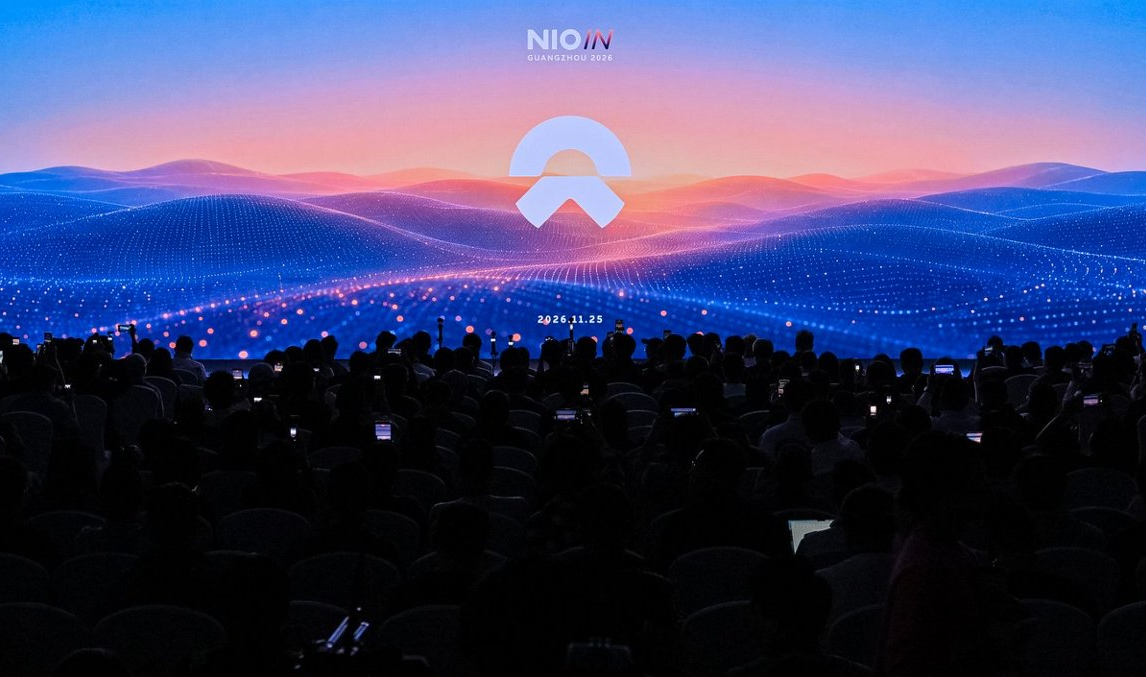
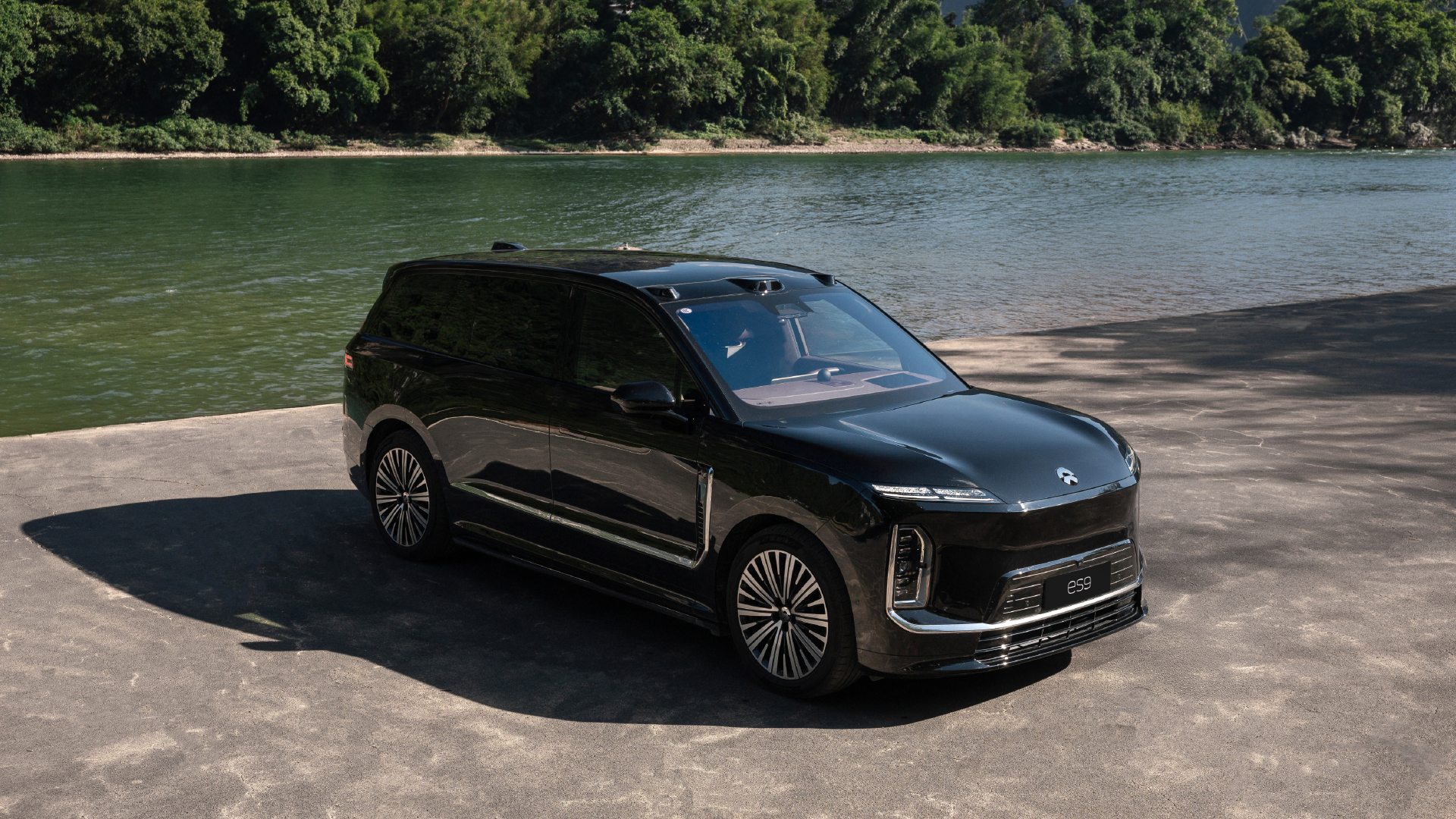
On July 31, the all-new flagship SUV from ONVO, the second brand under the NIO Group, was officially launched with a starting price of 265,800 yuan ($37,212).
The following day, NIO held a small-scale face-to-face media roundtable in Hangzhou, attended by a senior executive team including NIO CEO William Li, NIO President Qin Lihong, and ONVO President Shen Fei.
At the briefing, NIO’s leadership addressed questions from the media regarding the pricing logic, profitability expectations, production capacity, and updates on the new NIO ES8.
Below is a highlight summary compiled by Chinaevhome, with the full Q&A transcript included in the second part of this article.
Strategic Positioning: L90 as NIO’s Turning Point for Profitability
At the event, William Li made it clear that the ONVO L90 is central to NIO’s goal of achieving company-wide profitability in Q4, calling it “the beginning of a qualitative leap.” At present, the L90 is NIO’s fastest ramping production model, with the supply chain fully cooperating to scale up capacity.
Regarding ONVO’s product matrix, Li revealed that the brand will stick to three models for the foreseeable future: the L60, L90, and L80, as they meet the needs of most family users. While more variants will be introduced, the product lineup will remain streamlined.
As for the third-generation ES8, a technical launch will be held at the end of August, with an official debut and simultaneous deliveries set for September’s NIO Day.
Pricing Logic: Cost Targets Drive Optimal Solutions
On the pricing logic behind the L90, Li stated: We first set a cost target, and then seek the optimal product definition based on that cost. The cost target considers market size, user budgets, technological innovations, supply chain strategies, and platform efficiency.
NIO’s pricing strategy will continue to vary according to target users and market segments, with the goal of offering the most user-oriented and value-driven products.
NIO and ONVO will clearly differentiate their pricing bands, each focusing on their respective customer segments to avoid internal competition.
Market Response: Orders Exceed Expectations
In terms of market response and brand expectation management, NIO officially stated that “new orders have doubled compared to initial forecasts.”
This is the first time NIO has adopted a “car-first, launch-later” approach, with existing inventory and early test drives helping to boost order volume.
At the same time, Qin Lihong confirmed that the number of locked-in orders significantly exceeds the current inventory, and the company is accelerating configuration matching.

Q&A Full Transcript
Q1: The ONVO L90 seems to be a hit. Is there hope for profitability in Q4? Will NIO have another blockbuster model?
William Li: After the tech launch, the L90 has gained significant traction. We started test drives early, and user feedback has been substantial. Whether the car sells well isn’t for us to say—it’s up to the market. While NIO doesn’t publish order numbers, rankings speak for themselves.
The L90 is a critical strategic product for us. Once you hit a certain point of investment, qualitative change follows. The L90 can indeed help us achieve Q4 profitability, which is a company-wide goal.
It’s just our first large SUV—more are coming. One lesson from our second-gen platform is that it didn’t fully align with space expectations in the Chinese market. The new ES8 will prove why large three-row SUVs are entering the all-electric era. Both the ONVO L90 and new ES8 will lead this transition—we are very confident.
Q2: Can the ONVO L90 be equipped with a 60 kWh battery?
William Li: We’ll look into it. We’ve heard user feedback and will conduct surveys. Technically, it’s not a problem. We’ve already filed regulatory declarations for the 60 kWh pack. In fact, our test drive units are using the 60 kWh battery. Even with just 60 kWh, it delivers significantly more range than the current 70 kWh extended-range versions.
Q3: How was the L90’s price determined?
Qin Lihong: Final pricing is actually simple once you understand the cost structure and competitive landscape. The real challenge lies in achieving that price point—and that’s what William meant by “strength built over time for a powerful release.” Features like 900V architecture and advanced manufacturing show how far our system capabilities have come.
A lot of users asked yesterday, “After offering all these features, can you still make a profit?” The answer is yes—the L90 still has reasonable gross margins under current conditions.
Q4: The marketing for the L90 seems quite strategic. Has NIO made any internal adjustments?
William Li: We learned from previous experiences. This time, we focused on “listening,” launched cars before the press conference, and ensured early availability of display and test vehicles. We built up some inventory and aligned offline and online campaigns more tightly. Starting with the L90, NIO will adopt a more compact release rhythm—which clearly helps.
Q5: Some people think it’s difficult to make such a large EV. How did you approach this product?
Shen Fei: I’ve been observing the auto industry since 2000 and started building cars myself in 2014. Experience taught me that product remains the most important competitive edge.
A car’s product strength is determined by three things: 1) technological path, 2) product planning (which markets you want to enter), and 3) detailed product definition (target user features, cost control, etc.).
The industry is clearly heading toward full electrification. Opinions vary on the pace and path, but we’ve seen strong sales of extended-range and plug-in hybrids—largely due to infrastructure, taxes, and user acceptance.
From day one, NIO has committed to pure electric. But entering the mass market requires user education and infrastructure maturity. Battery costs also matter—back in 2022, our per-vehicle cost went up by 40,000 yuan ($5,600), mostly due to battery price hikes, which affected BEVs more than hybrids. Pure electric tech wasn’t mature then—800V or 900V systems were not feasible, and motors couldn’t be miniaturized.
But because of our long-term commitment, we’ve been able to see where technology is headed. By 2025, we can offer a 240L front trunk because we laid the groundwork two to three years ago.
This long-term vision also let us anticipate issues like battery lifespan. In 2024, we called for urgent action—others will catch on in 2–3 years.
That said, hybrids have helped users develop electric driving habits. When they upgrade, they’ll naturally turn to BEVs.
Q6: Many stores saw explosive popularity—was this expected? What preparations were made on the sales side? You mentioned placing an order before 9:30 am was best. Though sales numbers weren’t disclosed, how much did that statement stimulate orders?
William Li: We knew there would definitely be a surge in new orders yesterday, but the actual increase far exceeded our expectations. The day before, orders had already doubled, and yesterday morning, they doubled again compared to our morning estimates.
Shen Fei: The sales side had done some prep and was somewhat aware of the momentum. Our frontline partners basically gave up trying to sell the L60. While William was speaking, I was checking real-time data, and the growth was slower than I expected. I think two main reasons led to the explosive orders: first, the product strength is obvious—many users really recognized it; second, the ONVO team has been improving rapidly since its founding last year.
Q7: Beyond price, what else is essential to make a full-size three-row SUV successful?
William Li: Ultimately, it’s about prioritization—based on your target user’s needs, you must make some hard trade-offs. And you also need to resolve certain “impossible triangles.” Our ONVO product team is excellent. Whether for the L60 or L90, during early development, they traveled across the country—from major cities to smaller towns—interviewing thousands of families to uncover insights that aren’t easily observed.
Q8: Can you reveal any updates on the new NIO ES8 and its launch timeline?
William Li: The new ES8 is positioned for both business and large families. It has many subtle yet powerful features that really resonate with users. It’s definitely something to look forward to. We’ll hold the product and tech launch in late August. Display vehicles will arrive at stores on a tighter schedule. It’ll officially launch and start deliveries at NIO Day in late September.
Qin Lihong: Some media might even see the real car around mid-August.
Q9: How do you view competition with Li Auto?
William Li: There are many outstanding Chinese automakers. We’ve learned a lot from our peers. Competition is constant, and we’ve been dedicated to battery-electric vehicles (BEVs) for over a decade. Likewise, others learn from us. It’s healthy. From our point of view, anyone doing BEVs is a teammate. That includes those building infrastructure—more companies doing this, like NIO, is a great thing.
Q10: How is ONVO L90’s production capacity?
William Li: We’ve prepared quite well this time. Last night, I received many WeChat messages from our supply chain partners informing me of their increased investments to ensure production. I won’t give specific numbers, but I can say the L90 is our fastest ramp-up model ever.
Q11: What has been the toughest moment so far?
William Li: The hardest time was seeing NIO users needing to defend us with extra effort—when they got caught in negative narratives and even started to doubt us. That was tough emotionally.
Q12: NIO’s stock rose around 10%. Anything to say to investors?
William Li: The stock market carries risks; invest cautiously. What people want to see now is our execution. This year, our focus is on improving operational efficiency and execution—especially execution around operations. We’ve made many changes, and I hope investors can witness our progress quarter by quarter. Actions speak louder than words—results matter most.
Q13: Any updates on the battery swap alliance?
William Li: First, we want to ensure ONVO becomes a leading brand in its market segment. This alliance will happen naturally. It’s not something we need to rush into. We must also ensure our service capacity can handle it. For example, we still need to grow our battery inventory. If we’re not ready, scaling up service too soon could cause problems.
Q14: What’s ONVO’s pricing logic? Will NIO and ONVO change how they manage orders?
William Li: Product definition has two parts: setting a cost target and finding the optimal solution within that cost.
You must first define your target market, then understand user budgets, and finally deliver the best, most suitable product at that price. Without cost, product definition is meaningless. For L90, we had a clear cost target and built the optimal solution within it.
NIO and ONVO target different segments. Within their own price brackets, both aim to offer the most valuable and user-aligned products. The target and logic remain the same, but the pricing brackets differ.
Q15: Some brands group two- and three-row models under one name. Will NIO change its naming system?
Qin Lihong: ONVO will launch the L80 next. For now, we use different names for two- and three-row models. Some brands group them due to similar exterior designs, but different seating layouts mean different usage scenarios for users. This helps users and sales reps (Fellows) better understand the product. Both naming strategies are valid.
Q16: Is it necessary for NIO and ONVO to release so many SUVs over ¥200,000 ($28,000)?
William Li: We haven’t actually added that many model lines. It’s normal for premium brands to offer more models and personalization. The key is how efficiently your R&D supports it. Our technology reuse rate is very high, so we don’t face issues with development efficiency.
Q17: How do you view the design of the ONVO L90?
William Li: Design is subjective. But we always ask our designers: why this design? What’s the user benefit? What’s the logic?
For instance, the first-gen ES8 didn’t have a front trunk—not because we couldn’t, but because we prioritized creating a “Queen’s co-pilot” front seat.
With the L90, we tackled the “impossible triangle” of design: a boxy, upright aesthetic that aligns with popular tastes, while also achieving a 0.25Cd drag coefficient and maximizing interior space. We made over 100 engineering optimizations to reach that goal.
Q18: Is the BEV trend becoming smoother now? What’s the real demand for large three-row BEVs in China? And will they gain significant market share by 2026 amid the hybrid vs. BEV debate?
William Li: The L90 marks a tipping point for BEVs. Pure-electric platforms offer many benefits: more space, lower cost, lower maintenance, and better smart features. These advantages are becoming increasingly pronounced.
Meanwhile, charging infrastructure has improved to the point that the gap vs. refueling is nearly gone.
Qin Lihong: A second tipping point came last year when over 50% of new car sales were NEVs. That means users now psychologically accept new energy—whether full or partial electric.
A third tipping point is infrastructure. In two weeks, we’ll announce the full connection of the battery swap network along the Sichuan-Xizang 318 highway in Chengdu—stay tuned.
Q19: What are your sales expectations for the second half of the year?
William Li: The third-gen ES8 is strategically important. Along with ONVO and Firefly, these products lay a strong sales foundation. While some customers still worry about NIO’s long-term viability, these strong-performing models will help restore confidence and bring momentum.
Q20: When will the ONVO L80 launch? Any sales forecast?
William Li: It’s too early to disclose. For now, ONVO won’t have too many models—just the L60, L90, and the announced L80. We believe these three can meet most current needs. Other models may come, but that’s a future discussion.
Q21: NIO hasn’t emphasized AI much in promotions—will that change on tech day?
William Li: Everyone talks about AI now, but let’s look at what we’ve done. In 2017, we said cars would become emotional intelligent companions. NOMI was the first in-car AI assistant in the industry. Our CIS is an AI-native full-domain operating system.
On hardware, our 5nm auto-grade chip Shenji 9031 places us in the global top tier. We’ve done a lot in chips and AI models. So it’s not about what we say—it’s about what we’ve actually built.
Q22: Shen Fei, what have you done to improve efficiency? What are your expectations of the team? And with your rising social media presence, are there any challenges?
Shen Fei: I think whether it’s about product development or organizational management on the sales side, it’s ultimately a systems project.
It’s hard to say that any single action alone can bring about major changes — the real work lies in continuously refining every aspect of the system. That’s how I see it: just like engineering, you’re constantly measuring the system, assessing what you want it to become, identifying how much deviation there still is in each dimension, and then going back to improve. So, it’s really difficult to pinpoint a specific action that suddenly changed everything. I don’t think it ever comes down to just one particular thing.
At the core, I believe it’s about helping the entire team learn how to “do the math” when talking to William — to become more cost-conscious and to continuously improve efficiency. Secondly, I hope each of us can strive to become a better version of ourselves, and to build a stronger team. With those broader goals in mind, we can then tackle the smaller issues in a more purposeful way, which I think is a better approach.
As for speaking up more recently, I think it’s simply because people care about the ONVO brand and there’s been more exposure. Honestly, I used to talk the same way on my WeChat Moments and Weibo, so I haven’t really changed — I just haven’t paid much attention to it.
Q23: Previously, high-end BEVs were expected to rise in price. Now popular BEVs are cheaper. Does this align with your long-term view? Does L90’s rich configuration challenge future product differentiation?
William Li: In China, taxes create bigger price gaps between premium and mass brands than in Europe. That’s why BEV pricing is still a bit chaotic here. Every brand will eventually settle into a price range. We considered labeling ONVO as a luxury brand, but decided to focus on clearly communicating value instead. If users feel each product meets their expectations, that’s enough.
Q24: Are NIO’s future models all capable of “launch and deliver immediately”?
William Li: “Launch and deliver” is just a choice—it’s not necessarily a capability. You can always delay the launch a bit. But “launch and scale” is a true capability, and that hinges on demand forecasting, not just production. If you predict high demand and build a lot, but demand falls short—or the reverse—it’s a problem. Matching supply and demand is the real skill.
Qin Lihong: Production capacity isn’t just about turning screws. If it were that simple, it wouldn’t be an issue.
Q25: Is it true that all “stockpiled” cars were locked in with orders?
Qin Lihong: Definitely not sold out yet. It’s not like all stock was gone by midnight. Today’s focus is matching orders to vehicles. But yes, locked-in orders far exceed available inventory. Matching configurations will take some time.
Discover more from ChinaEVHome
Subscribe to get the latest posts sent to your email.