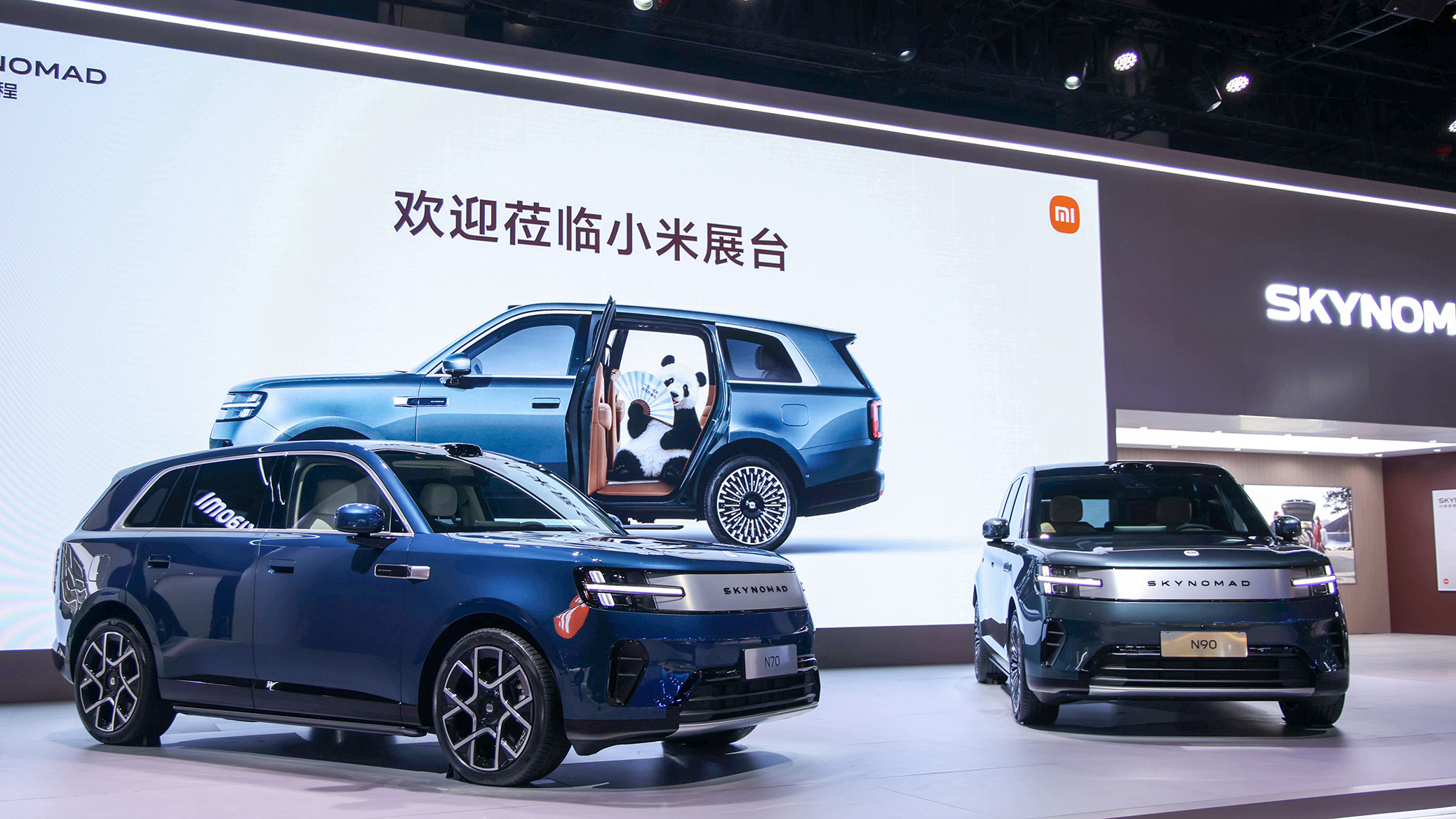
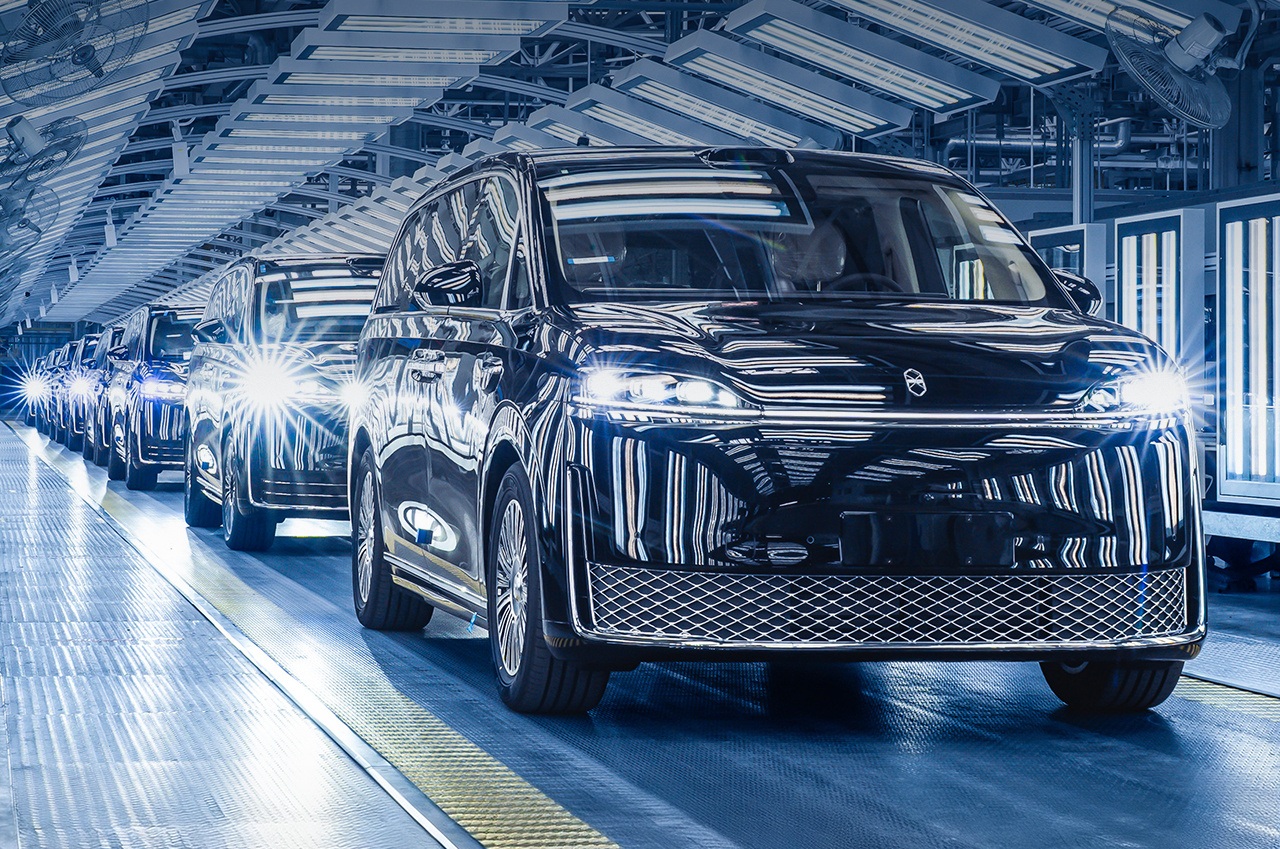
The top 10 best-selling new energy vehicle (NEV) sedans in August are as follows (in order): BYD Qin PLUS, BYD Qin L, BYD Seal 06, Xiaomi SU7, Tesla Model 3, Xpeng M03, Geely Galaxy A7, Chery Fulwin A9L, Leapmotor B01, and Geely Galaxy Xingyao 8.
In August, the penetration rate of new energy vehicles (NEVs) in China hit a new high. The retail penetration rate released by the China Passenger Car Association (CPCA) reached 55.3%, remaining above 50% for six consecutive months. On the other hand, data from the China Association of Automobile Manufacturers (CAAM) showed this figure also stood at 48.8%.
NEVs have become the first choice for most Chinese consumers, especially in the micro-car segment. Pure electric models such as Geely Geome, Wuling Hongguang MINI EV have all become major considerations for people.
Now, with the development of China’s NEV market, NEV manufacturers aim to extend this advantage to higher-positioned markets, such as the mainstream sedan and SUV markets.
Looking at the monthly sales rankings of segmented sedan and SUV models, it is not difficult to find that models with outstanding comprehensive performance, such as Sylphy, Lavida, Boyue L, and Tiguan L, still remain in the top 10. The competition between fuel-powered vehicles and NEVs continues.
The compact sedan market, which is more affordable and has space that better meets the needs of the Chinese market, was the first area where Chinese NEV brands launched their offensive. In August this year, BYD still maintained its position in the top three of this list, but the sales of its three models all declined to varying degrees. Meanwhile, the Xiaomi SU7, starting at RMB 215,900 ($30,300), is rapidly closing the gap.
At the same time, a number of new models such as Geely Galaxy A7, Xingyao 8, Leapmotor B01, and Chery Fulwin A9L are still in the hot sales period after their launch and have achieved impressive results.
So, which models made it to the top 10 of China’s NEV sedan sales ranking in August?
Let’s take a look together.
No. 1 BYD Qin PLUS: 35,800 Units

The BYD Qin PLUS sold 35,800 units in August, accounting for 9.5% of BYD’s total sales of 373,626 units in August. However, compared with 42,765 units in August 2024, its sales decreased by 16.3% year-on-year.
Despite the year-on-year decline, this achievement still makes it the best-selling sedan in the overall sedan market (regardless of energy type), even when excluding the “new energy” power category restriction.
The price range of this model is RMB 79,800–129,800 ($11,200–18,300). Except for the impact of market fluctuations at the beginning of the year, which reduced its monthly sales to 25,000–29,000 units, the monthly sales of BYD Qin PLUS have exceeded 30,000 units since June, and even reached 38,618 units in June.
The BYD Qin PLUS, which completed its facelift at the beginning of the year, is equipped with the DiPilot assisted driving system in its mid-to-high configuration versions (except for the entry-level version priced at RMB 79,800 / $11,200), featuring high-speed navigation, valet parking, remote parking and other capabilities.
The range advantage brought by hybrid technology and the enhancement of intelligent functions have raised the comprehensive performance of BYD’s products to a new level. However, the year-on-year decline also indicates that the intensity of market competition continues to increase.
No. 2 BYD Qin L: 25,380 Units

The BYD Qin L, which is slightly larger in size than the BYD Qin PLUS, sold 25,380 units in August, a year-on-year decrease of 29.4%, but an increase compared with 24,490 units in July 2025.
As a mid-size sedan, the BYD Qin L outperforms the Qin PLUS in terms of size, power output, and configuration. The threshold for owning this car is also slightly higher than that of the Qin PLUS: RMB 99,800–139,800 ($14,000–19,700).
The emergence of competitors such as Xpeng M03, Galaxy A7, and Leapmotor B01 is the main reason for the year-on-year decline of BYD Qin series in 2025. At the same time, BYD also attached greater importance to strengthening mid-to-high-end brands such as Fang Cheng Bao and Denza, as well as expanding overseas markets in 2025, seeking to continuously improve profit margins.
No. 3 Seal 06: 24,353 Units

The Seal 06, which launched its pure electric version on June 7 this year, also could not escape the predicament of year-on-year sales decline.
In August, supported by both pure electric and plug-in hybrid versions, the Seal 06 sold 24,353 new cars, a year-on-year decrease of 39.1% compared with 40,015 units (which only had plug-in hybrid versions) in the same period last year.
The Seal 06 series, priced at RMB 99,800–186,800 ($14,000–26,300), includes multiple models such as DM-i sedan version, DM-i station wagon version, GT version, and EV version. It also upgraded its assisted driving system with high-speed navigation and valet parking capabilities at the beginning of this year.
So far, BYD’s models have all appeared in the top 10 best-selling NEV sedans in China in August 2025. Although these three BYD models still firmly hold the top three positions, they all have declined to varying degrees. As we mentioned above, the entry and enhancement of powerful competitors have led to the sales decline of some BYD models.
The models catching up behind them have their own advantages over BYD in terms of price, intelligence level, and configuration.
No. 4 Xiaomi SU7: 19,848 Units

The Xiaomi SU7, which remains popular and has increased production capacity, achieved sales of 19,848 units in August, a year-on-year increase of 51.4%. With a price range of RMB 215,900–299,900 ($30,400–42,200), it ranks fourth in the August best-selling list.
Currently, Xiaomi Auto has two models: Xiaomi SU7 and Xiaomi YU7. Except for the impressive figures announced at the initial launch, such as receiving 50,000 pre-orders in 27 minutes and 289,000 pre-orders in one hour, the company rarely discloses the order status of the two models.
For Xiaomi Auto, the urgent problem to solve is production capacity. Many people are looking forward to the commissioning and production ramp-up of its second and third factories, which are expected to drive Xiaomi Auto’s sales to a higher level.
No. 5 Tesla Model 3: 17,739 Units

Although Tesla showed a relatively significant sales decline in many European and American markets in August, the decline rate in the Chinese market was relatively moderate.
Taking the Model 3 as an example, it sold 17,739 units in August, a slight year-on-year decrease of 2.1% compared with 18,126 units in the same period of 2024. It ranks second only to the Xiaomi SU7 in the NEV sedan market of the RMB 200,000 ($28,100) segment, demonstrating strong product strength.
The price of this model in the Chinese market is RMB 235,500–339,500 ($33,100–47,800), making it an “evergreen” in China’s NEV sedan market. However, with the arrival of the Xiaomi SU7, the position of the Model 3 has been challenged, and people are also looking forward to Tesla launching an affordable model to provide more choices for consumers.
No. 6 Xpeng M03: 15,333 Units

The Xpeng M03, which started large-scale delivery in September 2024, has maintained stable sales performance.
In August, the car sold 15,333 units, a slight decrease compared with 15,704 units in July, but within the normal range of sales fluctuations.
The M03 is the main sales driver of Xpeng and the “hero” behind Xpeng’s rapid sales growth. In August, Xpeng delivered a total of 37,709 new cars, a year-on-year increase of 168.7%, achieving a doubling of deliveries.
Different from BYD, Xpeng intentionally emphasizes the label of “young pioneer group” for the M03, whether in vehicle design, promotion, or the emphasis on intelligence – with a minimum price of RMB 129,800 ($18,300), consumers can have full-scenario assisted driving capabilities. Xpeng has created a differentiated track different from BYD.
No. 7 Geely Galaxy A7: 12,078 Units

The Geely Galaxy A7, launched on August 8, sold 12,078 new cars in August.
According to the results announced by Geely Galaxy, the Galaxy A7 delivered more than 16,000 units from August 8 to September 8, achieving a win-win situation in both orders and production capacity.
This plug-in hybrid model has a comprehensive range of over 2,100 km, a system comprehensive power of 238 horsepower, and a fuel consumption of 0.9 L per 100 km under WLTC conditions. Its price range is RMB 89,800–125,800 ($12,600–17,700), and it is another important product of Galaxy in the mainstream market.
As a brand responsible for volume in Geely Automobile’s NEV strategy, Geely Galaxy has grown at an amazing speed: from the launch of its first model, Galaxy L7, on May 31, 2023, to the completion of its 1 millionth delivery on June 2, 2025, Geely Galaxy has become the fastest-growing NEV brand to reach 1 million deliveries.
Moreover, Geely Galaxy has set a target of selling 1 million units annually in 2025, and this momentum has made it regarded as a strong competitor of BYD.
No. 8 Chery Fulwin A9L: 10,243 Units

The Chery Fulwin A9L, priced at RMB 149,900–207,900 ($21,100–29,200), achieved sales of 10,243 units in its first full delivery month.
This new mid-to-large sedan has a length of 5 meters and a wheelbase of 3,000 mm. It can provide a pure electric range of 260 km under CLTC conditions, a comprehensive range of over 2,500 km (measured), and a peak power of 475 kW + a maximum torque of 854 N·m, among other capabilities and user experiences.
Chery has achieved outstanding results in overseas markets among Chinese independent brands. In 2024, Chery’s overseas sales reached 114,500 units, accounting for nearly 44% of its total sales of 260,400 units. The Fulwin A9L will also be launched in the global market in the first quarter of 2026.
No. 9 Leapmotor B01: 10,171 Units

The Leapmotor B01, launched in June, achieved 10,000 deliveries 37 days after its launch. Its delivery volume in August even exceeded 10,000 units, reaching 10,171 units, becoming another core product of Leapmotor in the low-tier market.
Leapmotor has long been good at leveraging the advantages of its full-stack independent R&D to bring more high-end capabilities to lower-tier market segments, and this is no exception for the B01.
Priced at RMB 89,800–149,700 ($12,600–21,100), the Leapmotor B01 features 18-minute fast charging from 30% to 80%, a CLTC range of 650 km, an 8295P cockpit chip, and a significantly improved driving experience, which are the key factors that appeal to consumers.
Relying on the hot sales of multiple models such as B01, C11, and C16, Leapmotor achieved a profit of RMB 30 million in the first half of this year, making it the second Chinese new power brand to achieve half-yearly profits after Li Auto.
Now, Leapmotor is preparing to bring products such as the C16 and lafa 5 to the European market.
No. 10 Galaxy Xingyao 8: 10,152 Units

The last spot on the list is claimed by the Geely Galaxy Xingyao 8 with sales of 10,152 units.
The Xingyao 8, launched on May 9, saw its sales temporarily drop to 8,439 units in June, but its stable monthly sales have exceeded 10,000 units in the past four months. The price of this car ranges from RMB 125,800 to 165,800 ($17,700–23,300).
The two high-end configurations of this model adopt the Thor EM-P hybrid system, with a pure electric range of 130 km under CLTC conditions. The high-end models are also equipped with standard features such as seat heating, ventilation, and massage.
(End)
Discover more from ChinaEVHome
Subscribe to get the latest posts sent to your email.