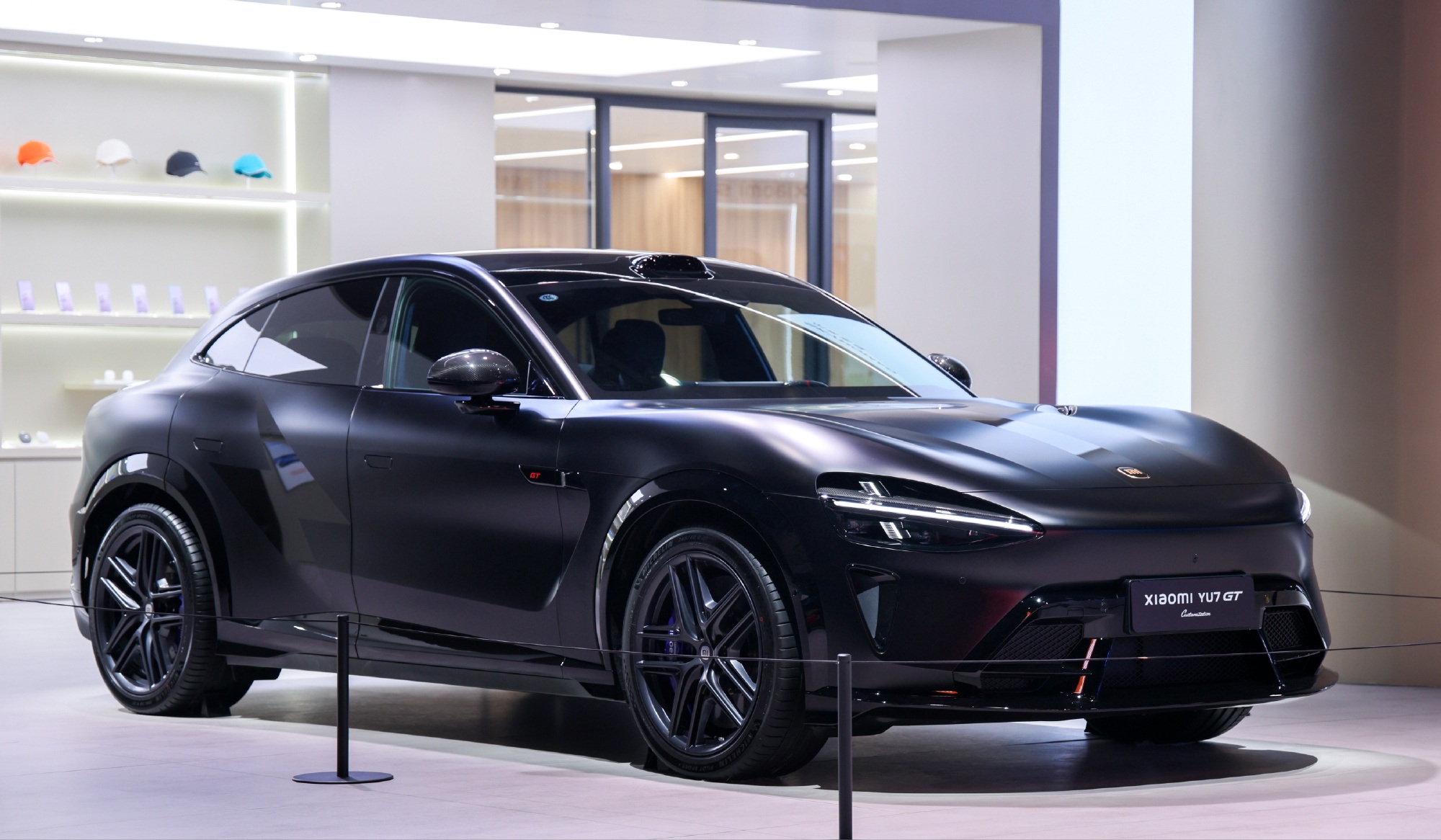
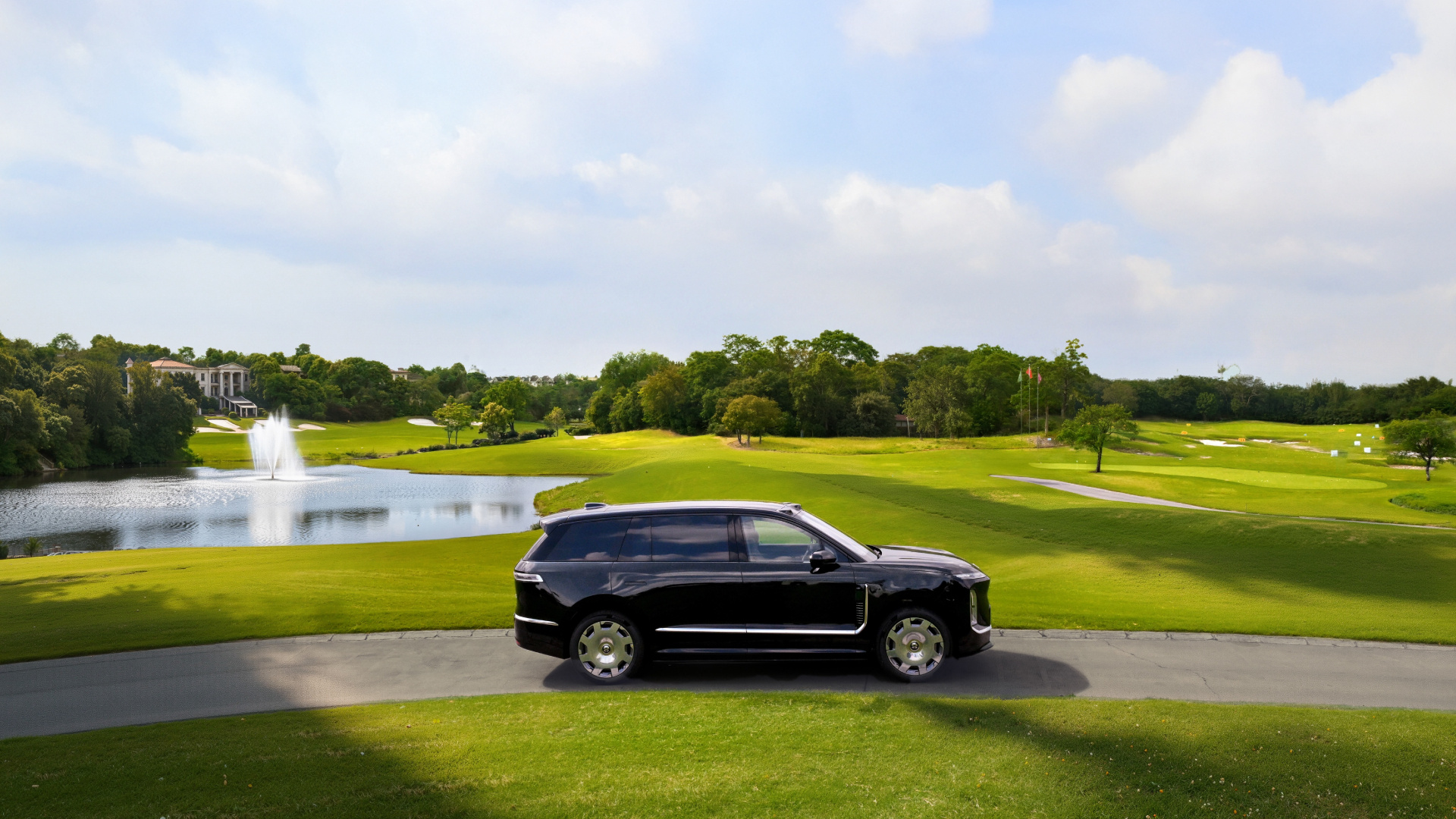
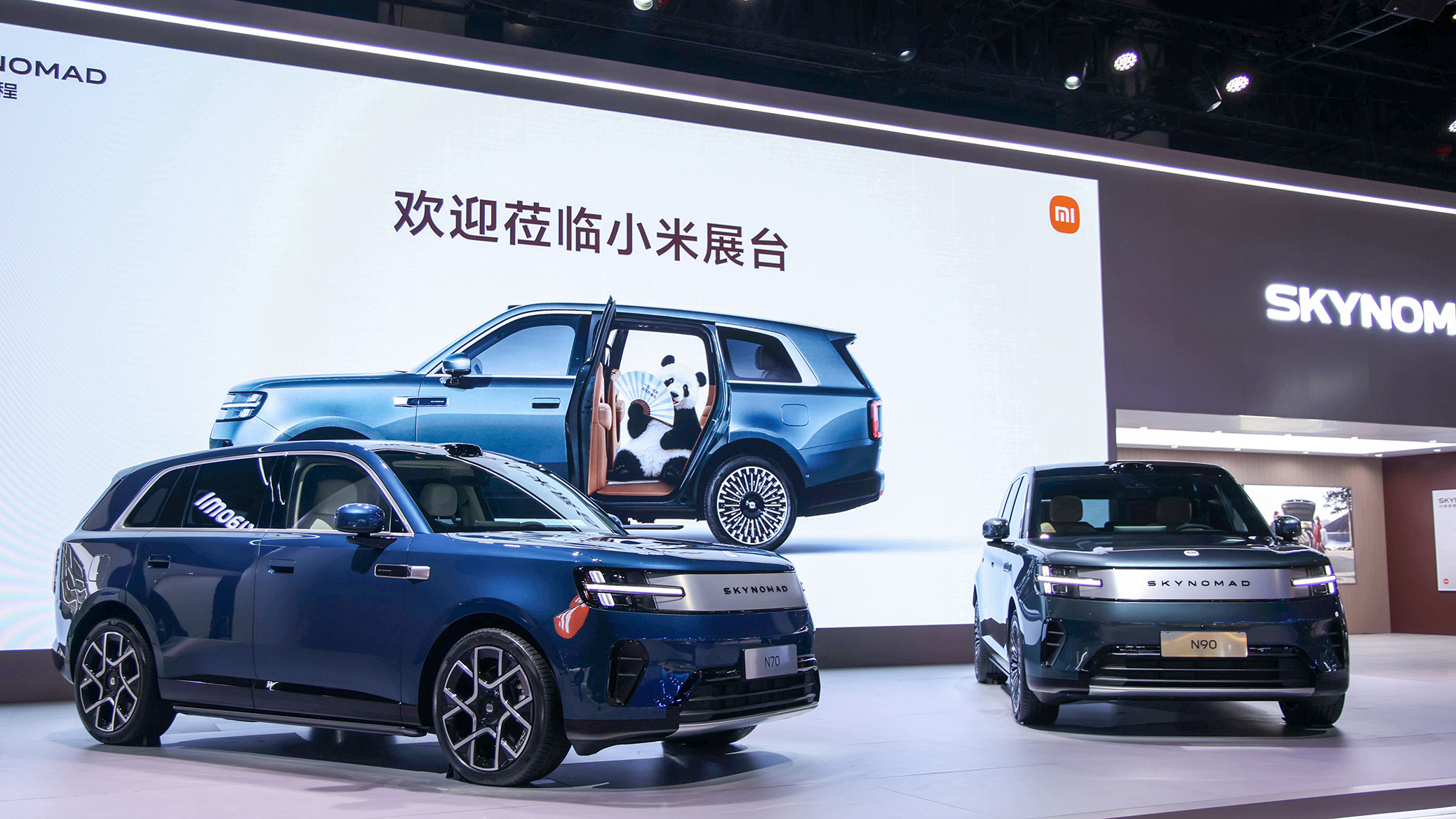
Judging from the leaked spy photos, it is obvious that the body contour is more elongated compared to the current Xiaomi SU7, and the fastback design is more prominent.
In the past two days, several bloggers have captured spy photos of what is suspected to be Xiaomi’s new car model during road testing.
Regarding the identity of the new car, most people believe it is the extended version of the Xiaomi SU7, namely the Xiaomi SU7 L.
However, a small number of voices have questioned the significance of Xiaomi launching an extended version of the SU7, arguing that lengthening the car body will affect the vehicle’s handling flexibility, while SU7 and Xiaomi Automobile’s main labels are performance and handling.
Previously, there were rumors that Xiaomi Automobile will launch models corresponding to the three projects of MS11-L, MX11-GT and Kunlun in 2026, and the MS11-L project is believed to correspond to the SU7 L. The code name of the Xiaomi SU7 at that time was MS11.
Judging solely from the leaked spy photos, the body contour is clearly more elongated compared to the current Xiaomi SU7, with the sloped-back (fastback) design being more prominent. Many people speculate that the new car will feature larger and more screens in the interior, as well as more ample rear seating space, among other improvements, which will optimize some of the upgradable aspects of the existing SU7.
What kind of model will the Xiaomi SU7 L be? Is it really of little significance to Xiaomi Automobile?
Let’s take a look together.
Making up for shortcomings?
The new car has a more stretched posture compared to the Xiaomi SU7. To achieve this visual optimization, the key certainly lies in a more generous vehicle length.
So how much has the SU7 L been lengthened?
Blogger @整车异响咣当咣当 (Vehicle Abnormal Noise Clang Clang) took the WEY VV7 as an example and guessed that the rear of the SU7 L is nearly 20cm longer than that of the SU7, the rear suspension and trunk are lengthened by about 10cm, the front door and B-pillar are moved forward by about 10cm, the rear door is lengthened by about 10cm, etc., and the slip-back shape is adjusted.

Most bloggers also guess that on the premise that the Xiaomi SU7 has a car length of 4997mm and a wheelbase of 3000mm, the length of the SU7 L may reach 5.2 meters, and the wheelbase may be lengthened by 80-100mm, that is, around 3.1 meters.
The more slender body and the more stretched slip-back shape after the C-pillar are expected to significantly improve the interior space of the new car, especially the rear legroom, which many users have reported. However, the optimization of the slip-back shape of the new car makes it more visually coordinated and conducive to wind resistance, but the improvement of head space is limited.
As an extended-version model, the SU7 L may have an improvement in interior luxury, such as the rumored interior materials, rear entertainment screens, intelligent temperature control, and seat comfort functions. In addition to adhering to the sports label, it also takes into account the comfort of passengers.
A longer model may mean a heavier body. Coupled with the possible upgrade to a 120-degree battery, the new car may adjust the power output style to balance range and performance on the basis of continuing the current power performance.

Different from the SU7 and SU7 Ultra, from the existing information, the SU7 L may be a model more in line with the needs of young families for cars. It features being suitable for both business and family use, enlarging the space, lengthening the body, and restraining the performance of the sports style. The tuning of power output may also be balanced.
In people’s minds, this is an RMB 400,000 ($55,800) product, and it is another upward product of Xiaomi after the SU7 Ultra and YU7. Before the new car is unveiled, its challenges and opportunities already exist.
Continuing to move upward
The current SU7, priced between RMB 215,900 and 299,900 ($30,100–41,700), could soon become the most affordable model in Xiaomi Automobile’s lineup.
In the new energy vehicle field, which is almost a new field for Xiaomi, the SU7 has opened a way to get rid of the long-standing impression of “affordable cost-effectiveness” in the digital industry, moving towards “mid-to high-end cost-effectiveness”, and even feeding back its high-end products in the digital field.

Taking advantage of the momentum, models such as the SU7 Ultra, YU7, and the planned full-size SUV and SU7 L have all confirmed this.
There are already many competitors in China’s automobile market for its full-size SUV. In the relatively niche luxury car market, the competitors of the SU7 L may not be new energy models such as the NIO ET7, BYD Han series, and Tesla Model S, but the “56E” that have dominated the luxury car market for many years.
With their elegant appearance, comfortable interior, and strong power, even though BBA generally cut prices in China to seek sales volume today, they can still impress many consumers.
The purchase of luxury cars is often related to social status symbols and emotional value. The continuous popularity of the Xiaomi SU7 since its launch on March 28, 2024 and most people’s positive attitude towards Xiaomi Automobile have given Xiaomi Automobile a good opportunity to move upward.
The SU7 L has the strong power and intelligent capabilities that pure electric vehicles generally have compared with fuel vehicles. Coupled with the deepening of Xiaomi’s strategy of integrating people, vehicles and homes and the upgrade of the interior on the SU7 L, Xiaomi Automobile’s challenge to BBA has not stopped.
In addition to the new energy luxury cars from Chinese new energy vehicle brands that are frequently launched, the challenge that the SU7 L has to face is Xiaomi’s production capacity. At present, the Xiaomi Automobile applet shows that the shortest delivery time for the SU7 is 34 weeks, and that for the YU7 is 40 weeks.
Furthermore, beyond production capacity, how to sell RMB 400,000 ($55,800) pure electric cars well is a new issue for Xiaomi, and also a long-term issue for Chinese automobile brands. Public data shows that the sales volume of the NIO ET7 in July was 564 units, while the Enjoy World S9 gradually increased its sales volume to 1942 units in July only by launching the extended-range version later.
The “56E” in the luxury large car market is still a mountain. Even BBA’s own pure electric cars have not achieved considerable sales results to surpass themselves.

With models such as the NIO ET7 and Tesla Model S not yet achieving impactful sales results, can the Xiaomi SU7 L do it? What kind of sales performance will it eventually achieve?
(End)
Discover more from ChinaEVHome
Subscribe to get the latest posts sent to your email.